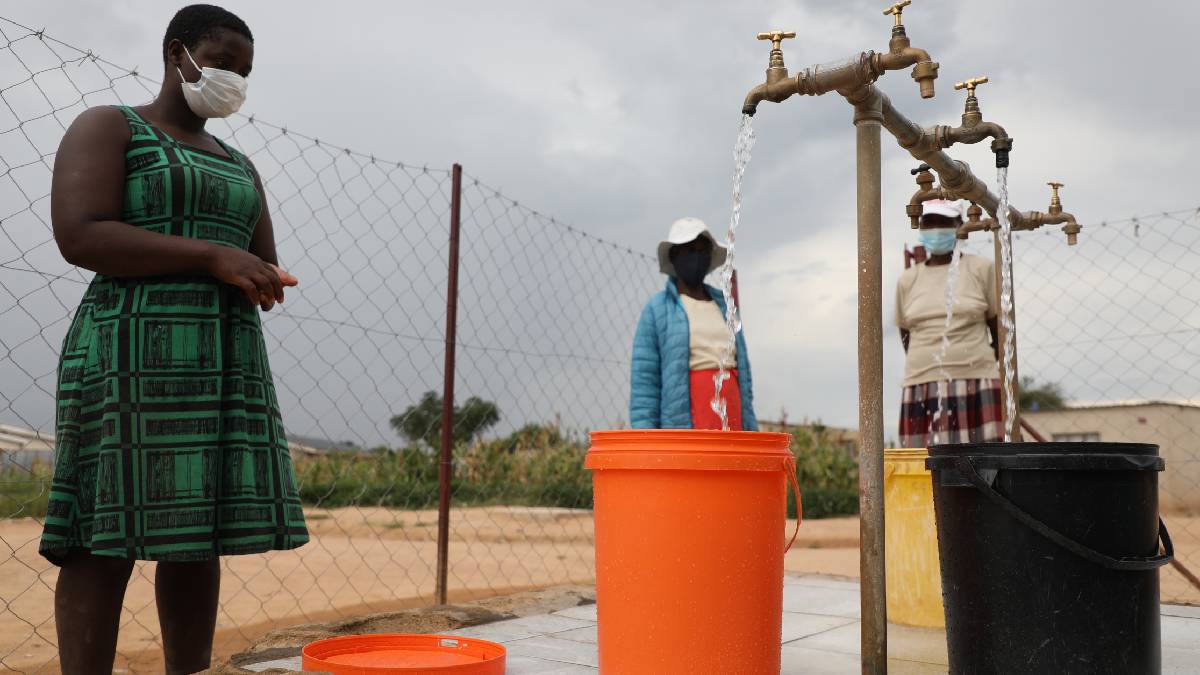
- An Auditor-General report found many devolution-funded projects incomplete or not started.
- Treasury transfers to local authorities remain a small share of total government spending.
- Industry disputes over mining royalties have intensified debate over how revenue reaches communities.
ZIMBABWE’S mining sector is on the rise, yet an official audit reveals that many projects funded through the government’s devolution programme are either incomplete or haven’t even started.
A value-for-money audit conducted by the Auditor-General in 2023 examined 27 projects, discovering that most were either unfinished or had not commenced at all. The report highlighted “non-monitoring of projects” and “non-disbursement of allocated funds” as significant issues.
The devolution programme aims to finance local clinics, schools, roads, and water systems. According to government regulations, 90% of the funds should be allocated to infrastructure, while the remaining 10% is meant for administration.
For mining districts, the implications are quite tangible. Ore trucks put a strain on the roads, water demand increases, and local services face mounting pressure as operations grow.
Data from the Treasury indicates that transfers are relatively modest compared to total expenditure. In the 2025 National Budget Statement, the finance ministry reported transfers of ZiG458 million to provincial councils and local authorities from January to September 2024, which accounts for just 0.7% of total expenditure during that time.
The Auditor-General’s report identified 18 incomplete projects in Harare and four in Ruwa, with 14 of Harare’s unfinished projects not even having started.
Even when funds are allocated, the audit suggests that there are still gaps in implementation.
Mining royalties are at the heart of the broader discussion regarding revenue and local benefits. They serve as a key mechanism for the state to capture value from mineral extraction.
However, there has been contention over how these royalties are calculated.
In its first-quarter 2025 review, the Chamber of Mines noted that the Zimbabwe Revenue Authority was basing lithium royalty calculations on the value of lithium salts produced in China, rather than the concentrate exported from Zimbabwe.
“No lithium producer is currently exporting lithium salts,” the Chamber stated, adding that it was in discussions with the government to align royalty charges with the actual mineral-bearing products being exported.
- ZiG458 million — transfers to provincial councils and local authorities (Jan–Sept 2024), according to the 2025 National Budget Statement.
- 0.7% — share of total expenditure represented by those transfers in the same period.
- 27 — devolution projects reviewed in the Auditor-General’s 2023 value-for-money audit.
- “Non-monitoring” and “non-disbursement” were cited among reasons projects stalled, the Auditor-General reported.
- Lithium royalties — the Chamber of Mines said royalty calculations were being based on the value of lithium salts produced outside Zimbabwe, not the concentrate exported.
- Gold royalties — Reuters reported a proposed rise from 5% to 10% was reversed after industry objections, leaving the 5% rate in place under revised rules.
This dispute underscores the tension between revenue collection and industry profit margins, especially as Zimbabwe aims to boost local processing of battery minerals.
Gold royalties have also been a politically charged issue. According to Reuters, Zimbabwe scrapped a proposal to raise gold royalties from 5% to 10% following pushback from industry groups, maintaining the 5% rate for gold priced between $1,200 and $5,000 per ounce. Small-scale miners are still paying up to 2%, as reported.
State media mentioned in January 2026 that over ZiG14 billion — roughly US$518 million — would be allocated to local authorities under the devolution framework that year. If fully realised, this would mark a significant increase.
However, past audit findings indicate that just because funds are allocated, it doesn’t guarantee that projects will be completed.
The Chamber of Mines also pointed out that a draft Economic Empowerment Bill, which has been approved by the cabinet, aims to shift policy towards greater community empowerment. The legislative process is still ongoing.
Zimbabwe exports gold, platinum, lithium, and diamonds on a large scale. The central question, as suggested by auditors and industry observers, is whether the revenue generated from royalties and national transfers is actually leading to visible infrastructure improvements at the local level.
For those living in mining districts, the proof is in the pudding. Roads need to be durable, clinics must operate effectively, and water systems should function reliably.