- KoBold launches a $50 million AI-driven lithium exploration campaign in DR Congo.
- Company uses data and airborne surveys to target new mineral deposits.
- Project adds to global push to secure critical minerals for clean energy.
U.S.-backed KoBold Metals has launched a large lithium exploration campaign in the Democratic Republic of Congo, committing more than $50 million to the programme.
The company is backed by investors including Breakthrough Energy Ventures and Andreessen Horowitz and uses artificial intelligence to locate mineral deposits.
The campaign spans 13 exploration licences and includes airborne surveys across about 30,000 square kilometres, along with drilling and geochemical sampling.
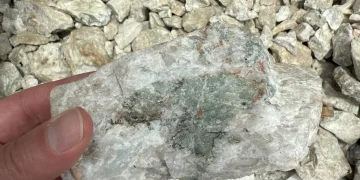
KoBold is focusing on the Manono area in Tanganyika province, a region known for some of the world’s highest-grade lithium pegmatites.
The company is using proprietary airborne sensors, real-time data analysis and AI models to guide drilling targets and reduce exploration risk.
Chief executive Kurt House said the company’s presence in Congo has expanded rapidly.
“A year ago, KoBold had no employees and no land in Congo,” he said. “Today we are the largest American investor in the country.”
The Democratic Republic of Congo is already the world’s largest producer of cobalt and a major supplier of copper.
According to the U.S. Geological Survey, global demand for lithium has risen sharply due to electric vehicles and energy storage systems.
This has increased competition for new sources of lithium beyond established producers such as Australia and Chile.
The DRC government has positioned critical minerals as a priority sector for investment and economic growth.
KoBold has already paid more than $20 million to the Congolese treasury, underscoring the scale of its entry into the country’s mining sector.
The project is part of broader efforts by the United States and its partners to secure access to critical minerals and reduce reliance on dominant global suppliers.
If exploration confirms viable lithium deposits, the next stage would involve resource definition through drilling, followed by feasibility studies.
Only after these steps can a project move to construction and production.