- Official gold sales rose in 2025, yet estimates suggest significant volumes still leave the country informally.
- Industry groups warn that pricing gaps and tax changes can fuel cross-border smuggling.
- Analysts say leakages continue to drain foreign currency and weaken public revenue.
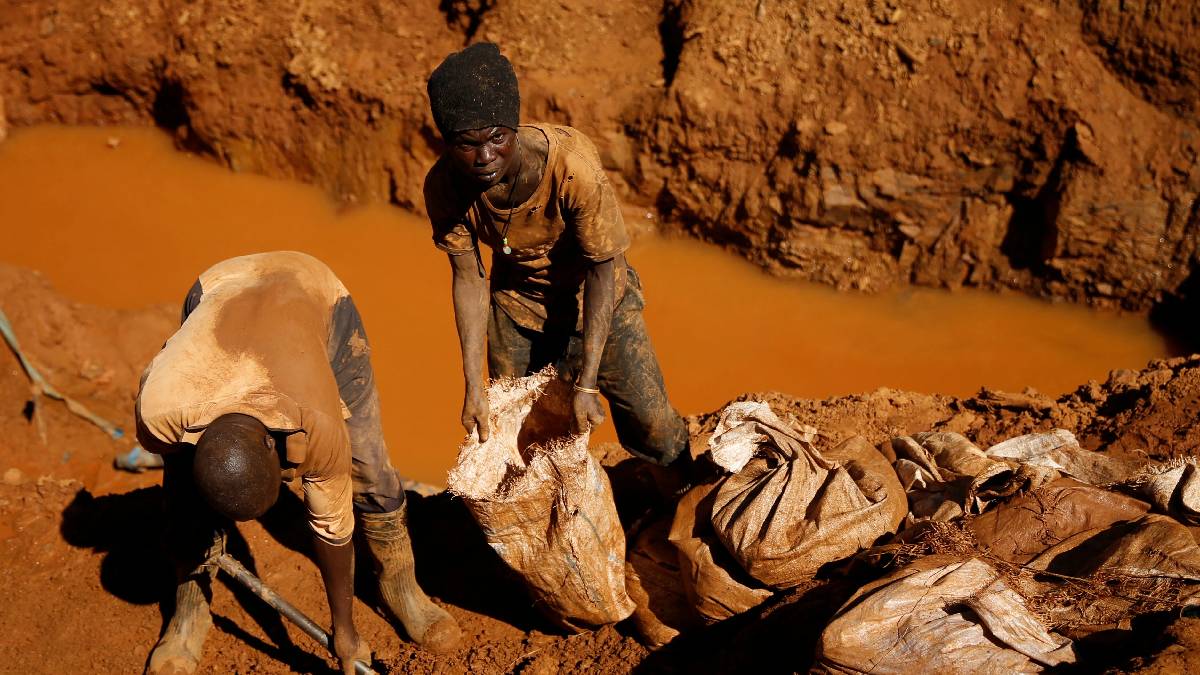
SMALL-scale miners played a crucial role in helping Zimbabwe reach its highest gold deliveries ever in 2025, yet the industry is still grappling with serious issues like smuggling and informal trade.
Fidelity Gold Refinery reported that deliveries hit 46.7 tonnes in 2025, a rise from 36.48 tonnes in 2024, with small-scale and artisanal miners contributing 34.9 tonnes and large-scale producers adding 11.8 tonnes.
This increase marks a significant boost in formal output, making the gold sector Zimbabwe’s top source of foreign currency.
In a bid to attract more gold into official channels, Fidelity has adjusted its purchase prices to align with international market rates.
“To curb illegal gold trading in Zimbabwe, Fidelity guarantees timely payments and competitive pricing, benchmarking its rates against the London Bullion Market Association (LBMA),” the refinery said in June last year.
Small-scale miners, represented by the Zimbabwe Miners Federation (ZMF), have long contended that delays in payments and pricing discrepancies have driven producers to informal buyers.
When the government suggested doubling gold royalties in late 2025, the federation warned that this would exacerbate smuggling.
“We project a dramatic increase in smuggling as miners seek better returns in neighbouring countries with lower fiscal impositions,” ZMF wrote to Finance Minister Mthuli Ncube.
The proposal was later modified, keeping the 5% royalty for most price bands while applying a 10% rate only when gold prices exceed $5,000 an ounce.
Despite the rise in official deliveries, estimates of gold leakages remain substantial.
Al Jazeera reported in 2023 that Zimbabwe was losing around $100 million a month due to gold smuggling, based on official estimates and investigative reports.
The International Crisis Group has noted that weak incentives and enforcement gaps have historically encouraged informal trading networks within Zimbabwe’s gold sector.
A Swissaid report revealed that in 2022, 435 tonnes of gold valued at over $30 billion were smuggled out of Africa, with the United Arab Emirates being a key destination.
This context highlights the significant challenges Zimbabwe faces.
Economist Tafara Mtutu suggests that the official delivery figures may not reflect the true extent of production. “What Fidelity receives is only a fraction of what is actually mined,” he noted in an analysis about gold leakages.
Authorities say that reforms are enhancing compliance. Fidelity maintains that spot-linked pricing and quicker settlements aim to eliminate the financial reasons for bypassing formal channels.
Yet, analysts point out that enforcement is inconsistent, and smuggling routes often adapt swiftly to changes in policy.
Security experts and investigative reports have uncovered cross-border networks and middlemen who transport gold through neighbouring countries before it reaches international markets.
The economic implications are significant. Mining accounts for over 10% of Zimbabwe’s GDP and more than 60% of its export earnings, according to the World Bank.
If leakages continue to be substantial, the country risks losing foreign currency, tax revenue, and the ability to stabilise its monetary system.
Thus, the record delivery figure for 2025 sends mixed signals.
While formal supply is increasing and policy changes seem to be bringing more miners into the official fold, the gap between what is mined and what is officially reported remains too wide for Zimbabwe’s gold boom to be fully visible.