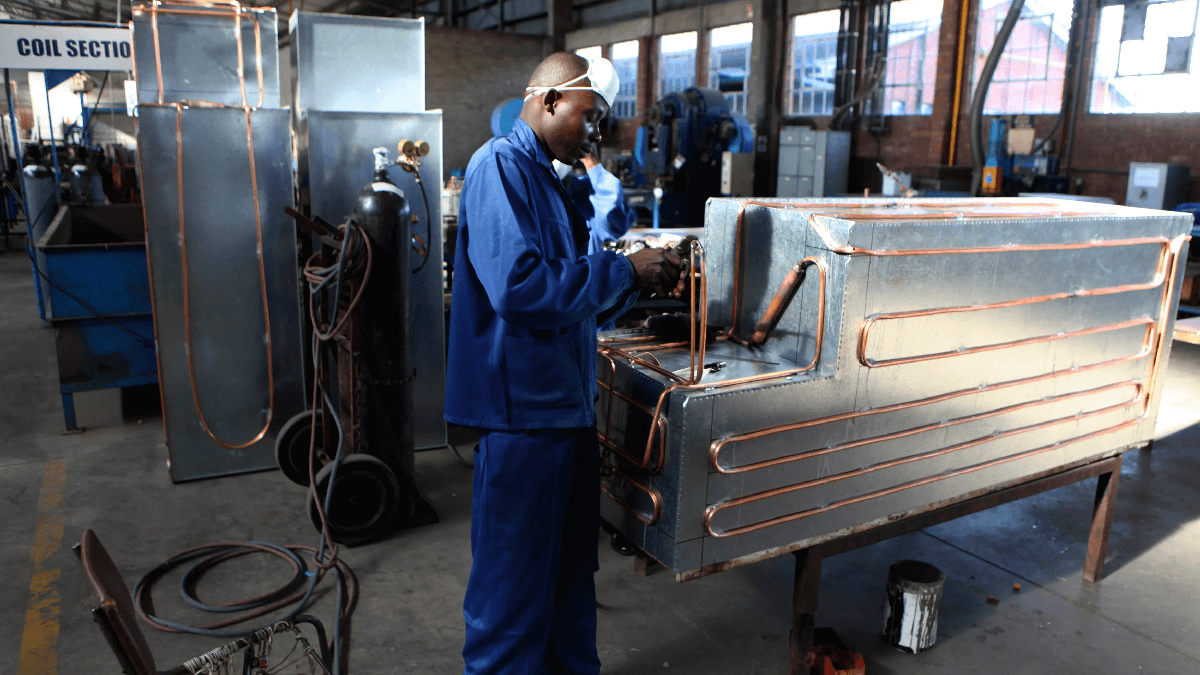
- About 45% of factory capacity is not being used, according to a CZI economist.
- This means lost production, lost income and less tax revenue for the country.
- Reducing regulatory costs and improving conditions could help firms use existing capacity.
FACTORIES all over the country are operating at just a fraction of their potential, with almost half of their installed capacity sitting unused, a senior economist in the industry has cautioned.
Dr Carren Pindiriri, a senior economist at the Confederation of Zimbabwe Industries (CZI), explained that companies have stabilised at about 55% capacity utilisation in recent years, which means around 45% of their productive capacity is going to waste.
In his analysis, titled Idle Capacity in the Manufacturing Sector: Exploiting Untapped Opportunities, Pindiriri highlighted that the difference between what factories are capable of producing and what they actually produce signifies lost output and income for Zimbabwe.
“Idle machinery and labour represent foregone output and revenue,” Pindiriri stated, adding that manufacturers could boost their output by approximately 45% if they fully utilised their capacity.
The performance of the manufacturing sector has been inconsistent. Recent surveys indicate that capacity use has dropped from over 50% in 2021 to the mid-40s in early 2025, as companies struggle with cash flow issues, electricity shortages, and economic uncertainty.
Output in the wider industry saw a decline in 2024, with capacity utilisation slowing down compared to previous years, as highlighted in the CZI’s annual survey.
Zimbabwe’s overall economy continues to face challenges due to weak demand and high costs, with manufacturing making up about one-fifth of the gross domestic product.
Pindiriri emphasised that both the government and industry need to collaborate to unlock the sector’s potential by reforming expensive regulations, taxes, and fees that contribute to production costs.
He suggested that reducing these costs could enhance competitiveness and enable firms to make better use of their current facilities and workforce.
Policy experts believe that improving infrastructure and stabilising foreign exchange conditions are also vital for increasing capacity use and output. Survey data indicates that energy shortages and the lack of a reliable currency for imports have hindered production.
Pindiriri mentioned that addressing idle capacity could lead to job creation and increased tax revenue, although he acknowledged that reforms would take time and require coordinated efforts from both the government and the private sector.