
ZiMining
  • News
    • Breaking News
    • Editor’s Picks
    • Company News
    • Exploration & Discovery
    • Production & Operations
    • Zimbabwe
    • Global
  • Commodities
    • Gold
    • Copper
    • Lithium
    • Critical Minerals
    • Platinum Group Metals
    • Diamonds
    • Coal
  • Regions
    • Zimbabwe
    • Southern Africa
    • West Africa
    • East Africa
    • Central Africa
    • Global
  • Markets
    • Prices & Data
    • Mining Stocks
    • Companies
    • M&A & Deals
    • Finance & Investment
    • Junior Miners
  • Technology
    • Innovation & Technology
    • Automation & Robotics
    • AI & Data Analytics
    • Digital Mining
    • Equipment & Machinery
    • Safety Technology
  • Sustainability
    • Environment & Climate
    • Community Impact
    • ESG & Reporting
    • Decarbonisation
    • Water & Land Use
    • Women in Mining
  • Policy
    • Government & Regulation
    • Government & Policy Makers
    • Legislation & Compliance
    • Trade, Tax & Royalties
    • Risk Management
    • Artisanal & Small-Scale Mining
  • Insights
    • Editorials
    • Contributors
    • Commentary & Analysis
    • Blasted Zone
    • Industry Leaders
    • Special Reports
    • ZiMining Magazine
    • Events & Conferences
    • Research & Reports
  • News
    • Breaking News
    • Editor’s Picks
    • Company News
    • Exploration & Discovery
    • Production & Operations
    • Zimbabwe
    • Global
  • Commodities
    • Gold
    • Copper
    • Lithium
    • Critical Minerals
    • Platinum Group Metals
    • Diamonds
    • Coal
  • Regions
    • Zimbabwe
    • Southern Africa
    • West Africa
    • East Africa
    • Central Africa
    • Global
  • Markets
    • Prices & Data
    • Mining Stocks
    • Companies
    • M&A & Deals
    • Finance & Investment
    • Junior Miners
  • Technology
    • Innovation & Technology
    • Automation & Robotics
    • AI & Data Analytics
    • Digital Mining
    • Equipment & Machinery
    • Safety Technology
  • Sustainability
    • Environment & Climate
    • Community Impact
    • ESG & Reporting
    • Decarbonisation
    • Water & Land Use
    • Women in Mining
  • Policy
    • Government & Regulation
    • Government & Policy Makers
    • Legislation & Compliance
    • Trade, Tax & Royalties
    • Risk Management
    • Artisanal & Small-Scale Mining
  • Insights
    • Editorials
    • Contributors
    • Commentary & Analysis
    • Blasted Zone
    • Industry Leaders
    • Special Reports
    • ZiMining Magazine
    • Events & Conferences
    • Research & Reports
No Result
View All Result
ZiMining
No Result
View All Result
Home Opinions

Vision 2030 must be lived, not imagined — why skills will define Zim’s future

A transformed built environment is central to sustainable socio-economic development

Professor Paul Mavima by Professor Paul Mavima
December 27, 2025
in Commentary & Analysis
Reading Time: 4 mins read
1
A A
0
Professor Paul Mavima, Zimbabwe’s Minister of Skills Audit and Development, speaking about Vision 2030 and skills transformation

Professor Paul Mavima, Zimbabwe’s Minister of Skills Audit and Development, speaks about the role of skills development in transforming the country’s built environment under Vision 2030. In an opinion article, Mavima argues that achieving Zimbabwe’s development goals will depend on building a workforce capable of designing, constructing and maintaining modern infrastructure across mining, industry, healthcare and education.

117
VIEWS
Share on LinkedinShare on XShare on Facebook

Summary

  • Vision 2030 calls for visible transformation in infrastructure and daily life, beyond GDP growth.
  • Skills development is critical, with mining, housing, transport and healthcare requiring modern engineering and technology.
  • Government, industry and education must collaborate to close skills gaps and ensure sustainable, inclusive growth.

WHEN PRESIDENT Emmerson Mnangagwa articulated Vision 2030 as the blueprint for transforming Zimbabwe into an upper-middle-income economy, he challenged us to think beyond abstract economic indicators.

Vision 2030 is not only about GDP growth or mining revenues reaching billions of dollars. It is about a tangible, visible transformation of the country’s built environment—one that citizens can see, touch and experience in their daily lives.

“Vision 2030 is not only about GDP growth. It must be something citizens can see, touch and experience in their daily lives.”

Zimbabwe Vision 2030 banner with national colors and development slogan
A promotional banner for Zimbabwe’s Vision 2030 initiative, which aims to transform the country into an upper-middle-income economy by the end of the decade. The slogan “Leaving no one and no place behind” underscores the government’s commitment to inclusive development through infrastructure and skills transformation.

That transformation must be reflected in the roads we drive on, the buildings where we live and work, the hospitals that serve our communities, the factories that produce our goods and the cities and towns where national life unfolds.

This vision will not be achieved through incremental change or outdated approaches. It demands a decisive transformation in the skills required to design, construct, maintain and operate the infrastructure of a modern economy.

The mining sector, as a key driver of economic growth, carries particular responsibility in this transition. Mining is inherently infrastructure-intensive, relying on roads, railways, power systems, processing facilities and supporting communities.

Under Vision 2030, mining infrastructure must reflect the highest standards of modern engineering, sustainability and technological sophistication.

“Every platinum refinery, lithium processing plant and gold mine developed between now and 2030 must embody the future we are building.”

Achieving this requires an urgent overhaul of how human capital is trained and deployed across the mining value chain and the broader economy it supports. With only a few years remaining to 2030, every delay in skills development represents lost progress.

The transformation envisioned under Vision 2030 must be visible across the national landscape. Transport networks should evolve into smart corridors equipped with sensors to monitor traffic flow, structural integrity and environmental conditions in real time.
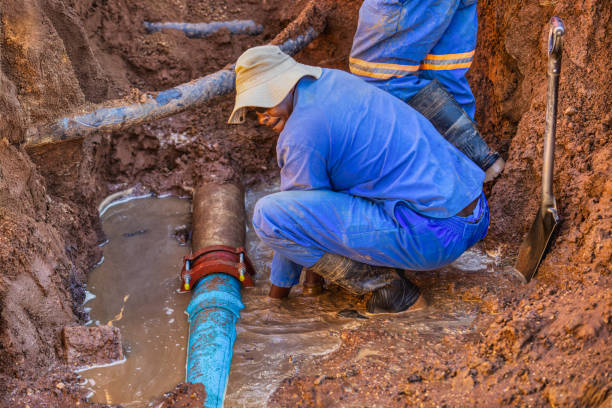
Engineers working on modern infrastructure systems supporting Zimbabwe’s development goals.
Engineers work on modern infrastructure systems, reflecting the skills and technological capacity required to support Zimbabwe’s Vision 2030 development goals across mining, industry and public services.

Roads must be built to withstand seasonal weather patterns rather than requiring constant repair. Rail systems should incorporate modern signalling, predictive maintenance and efficient cargo handling to position Zimbabwe as a regional logistics hub.

None of this happens automatically. Smart infrastructure requires civil engineers trained in advanced systems, technicians capable of maintaining sensor networks, data analysts who can interpret real-time information and project managers versed in digital construction techniques.

Housing and urban development must undergo similar transformation. Sustainable building designs that maximise natural light, ventilation and energy efficiency should become standard rather than exceptional.

Residential developments should integrate water harvesting systems, solar energy and smart home technologies that allow residents to monitor and manage energy use. Urban buildings must be constructed to international standards, resilient to environmental stresses and designed for long-term sustainability.

Yet many housing developments continue to rely on outdated methods.

“Zimbabwe cannot afford to build today’s infrastructure using yesterday’s knowledge.”

Industrial and manufacturing facilities must also evolve. The factories of the future integrate artificial intelligence across operations—from automated material handling and predictive maintenance to quality control and energy optimisation.

Modern mining processing plants should employ sensors throughout production chains, generating data on performance, quality and resource use. Machine learning systems can then analyse this data to identify inefficiencies and prevent equipment failure.

These technologies are already in use globally. What limits their widespread adoption locally is not access to capital, but shortages in skills.

“What limits adoption of modern technology in Zimbabwe is not capital availability, but skills capacity.”

Healthcare infrastructure presents another critical test of Vision 2030. Modern health facilities must combine advanced medical technologies with sustainable design and intelligent systems management.

Hospitals should integrate digital patient records, diagnostic equipment and telemedicine capabilities that connect rural clinics with specialist services. Building management systems must optimise air quality, temperature and energy use to support healing environments while controlling costs.

Education infrastructure must reflect the same ambition. Schools and universities should showcase green building principles and provide digitally enabled learning environments.

Vocational training centres, especially those serving mining and industry, must mirror the technologies students will encounter in the workplace. Without this alignment, skills development efforts remain disconnected from economic realities.

Tourism and environmental infrastructure also play a vital role. Zimbabwe’s natural heritage offers immense economic potential, but unlocking it requires infrastructure that meets international standards while preserving ecosystems.

Eco-lodges should demonstrate sustainable architecture, renewable energy use and minimal environmental impact. National parks require smart monitoring systems to manage wildlife and enhance visitor experiences.

Across every sector, the message is clear: infrastructure transformation depends on skills transformation.

Global competition for skilled professionals is intensifying. Countries across Africa are pursuing similar development goals, competing for the same talent pool. Zimbabwe cannot afford to be passive.

The Ministry of Skills Audit and Development is working with industry and training institutions to identify skills gaps, modernise curricula and align training with economic needs. However, success requires participation from every stakeholder.

Mining companies must invest in training beyond immediate operational needs. Educational institutions must embrace rapid curriculum reform. Professional bodies must update standards, and government agencies must streamline skills recognition.

Vision 2030 represents a commitment to citizens that development will be visible, inclusive and sustainable. That promise will not be fulfilled through output targets or infrastructure spending alone.

“Vision 2030 will be realised only when Zimbabwe has the skills to design, build, operate and maintain a modern economy.”

When that happens, Vision 2030 will not just be imagined. It will be lived.

Editor’s note:
This is an edited web version of an opinion article by Professor Paul Mavima, Minister of Skills Audit and Development, originally published in the December 2025 print edition of ZiMining. The full article is available in the PDF magazine.

Tags: InfrastructureMining PolicySkills DevelopmentVision 2030
Professor Paul Mavima

Professor Paul Mavima

Professor Paul Mavima is the Minister of Skills Audit and Development, with extensive experience in education policy, workforce planning and institutional reform. He has contributed to national strategies on skills mapping, capacity building and sustainable development, helping align human capital initiatives with long‑term economic goals.

Related Posts

Reserve Bank of Zimbabwe Governor John Mushayavanhu gestures during a meeting, discussing suspension of the foreign currency retention policy for small-scale gold miners.
Opinions

RBZ policy reversal exposes deeper cracks in monetary strategy

by ZiMining
March 25, 2026
Next Post
Underground miner wearing protective gear working below ground in a platinum mine.

Zimplats records zero lost-time injuries in third quarter

Leave a Reply Cancel reply

Your email address will not be published. Required fields are marked *

I agree to the Terms & Conditions and Privacy Policy.

Search ZiMining

No Result
View All Result

Most Read

  • Zimbabwe Mines Minister Polite Kambamura seated at a desk with the national flag behind him.

    Zimbabwe suspends raw mineral, lithium concentrate exports with immediate effect

    0 shares
    Share 0 Tweet 0
  • Goriwondo advocates engineer-led reforms at ZIE leadership

    0 shares
    Share 0 Tweet 0
  • Retrenched diamond workers ask state to recover unpaid pensions

    0 shares
    Share 0 Tweet 0
  • Union backs lithium export halt, calls for worker protections

    0 shares
    Share 0 Tweet 0
  • IMPACT hires communications lead for planetGOLD Zimbabwe project

    0 shares
    Share 0 Tweet 0

Latest from ZiMining

Coal miners wearing protective clothing and helmets work at a mining site.

Mining sector tightens rules on fixed-term contracts

April 15, 2026
Aerial view of the Manono lithium deposit in southeastern Democratic Republic of Congo.

KoBold Metals launches AI-driven lithium exploration in DR Congo

April 14, 2026
Close-up of a hand holding a white and green lithium-bearing rock sample over crushed stones at the Fonlo Project in Nigeria.

Australian miner reports high-grade lithium find in Nigeria after licence approvals

April 13, 2026
Underground miners in protective gear at Zimbabwe School of Mines.

Zimbabwe School of Mines calls for gender equality in mining

April 9, 2026
Open‑pit mine with excavators and lithium processing plant.

Zimbabwe tightens grip on lithium exports, demands local processing push

April 8, 2026
ZiMining


ZiMining is an independent mining and natural resources news platform based in Zimbabwe, with a focus on Zimbabwe, Africa and global markets. We provide factual, balanced and industry-driven reporting on mining, energy, sustainability, policy and commodities.


Categories

  • Africa
  • AI & Data Analytics
  • Archive
  • Artisanal & Small-Scale Mining
  • Automation & Robotics
  • Blasted Zone
  • Breaking News
  • Central Africa
  • Coal
  • Commentary & Analysis
  • Commodities
  • Community Impact
  • Community Voices
  • Companies
  • Companies
  • Company News
  • Copper
  • Critical Minerals
  • Decarbonisation
  • Diamonds
  • Digital Mining
  • East Africa
  • Environment & Climate
  • Equipment & Machinery
  • Events & Conferences
  • Exploration & Discovery
  • Features
  • Finance & Investment
  • Global
  • Gold
  • Gold
  • Government & Policy Makers
  • Government & Regulation
  • Industry Leaders
  • Innovation & Technology
  • Interviews
  • Junior Miners
  • Latest Edition
  • Legislation & Compliance
  • Lithium
  • M&A & Deals
  • News
  • Opinions
  • Platinum Group Metals
  • Production & Operations
  • Risk Management
  • Safety Technology
  • Southern Africa
  • Special Reports
  • Sustainability
  • Trade, Tax & Royalties
  • Water & Land Use
  • West Africa
  • Women in Mining
  • Zimbabwe

Got a Story?

Have a news tip, document or story idea related to mining, energy, policy or governance?
Email us at

editor@zimining.co.zw


About ZiMining


Contact & Advertise

Recent Posts

  • Mining sector tightens rules on fixed-term contracts
  • KoBold Metals launches AI-driven lithium exploration in DR Congo
  • Australian miner reports high-grade lithium find in Nigeria after licence approvals

© 2025 ZiMining - Exclusively Mining | Privacy Policy | Terms & Conditions

Welcome Back!

Login to your account below

Forgotten Password?

Retrieve your password

Please enter your username or email address to reset your password.

Log In
ZiMining Donation Banner
ZiMining

News without an agenda.

ZiMining is an independent publication with no corporate parent, no shareholders and no government influence. Our mission is journalism, not profit margins. Your donation supports independent reporting that serves the mining industry across Africa.

ZiMining Sliding Donation Card
No Result
View All Result
  • News
    • Breaking News
    • Editor’s Picks
    • Company News
    • Exploration & Discovery
    • Production & Operations
    • Zimbabwe
    • Global
  • Commodities
    • Gold
    • Copper
    • Lithium
    • Critical Minerals
    • Platinum Group Metals
    • Diamonds
    • Coal
  • Regions
    • Zimbabwe
    • Southern Africa
    • West Africa
    • East Africa
    • Central Africa
    • Global
  • Markets
    • Prices & Data
    • Mining Stocks
    • Companies
    • M&A & Deals
    • Finance & Investment
    • Junior Miners
  • Technology
    • Innovation & Technology
    • Automation & Robotics
    • AI & Data Analytics
    • Digital Mining
    • Equipment & Machinery
    • Safety Technology
  • Sustainability
    • Environment & Climate
    • Community Impact
    • ESG & Reporting
    • Decarbonisation
    • Water & Land Use
    • Women in Mining
  • Policy
    • Government & Regulation
    • Government & Policy Makers
    • Legislation & Compliance
    • Trade, Tax & Royalties
    • Risk Management
    • Artisanal & Small-Scale Mining
  • Insights
    • Editorials
    • Contributors
    • Commentary & Analysis
    • Blasted Zone
    • Industry Leaders
    • Special Reports
    • ZiMining Magazine
    • Events & Conferences
    • Research & Reports

© 2025 ZiMining - Exclusively Mining | Privacy Policy | Terms & Conditions

This website uses cookies. By continuing to use this website you are giving consent to cookies being used. Visit our Privacy and Cookie Policy.
Are you sure want to unlock this post?
Unlock left : 0
Are you sure want to cancel subscription?