- SADC is being urged to strengthen safety systems as demand for critical minerals grows.
- New technology could help detect fatigue and prevent mining accidents.
- Women, youth and small-scale miners should have a greater role in mining innovation.
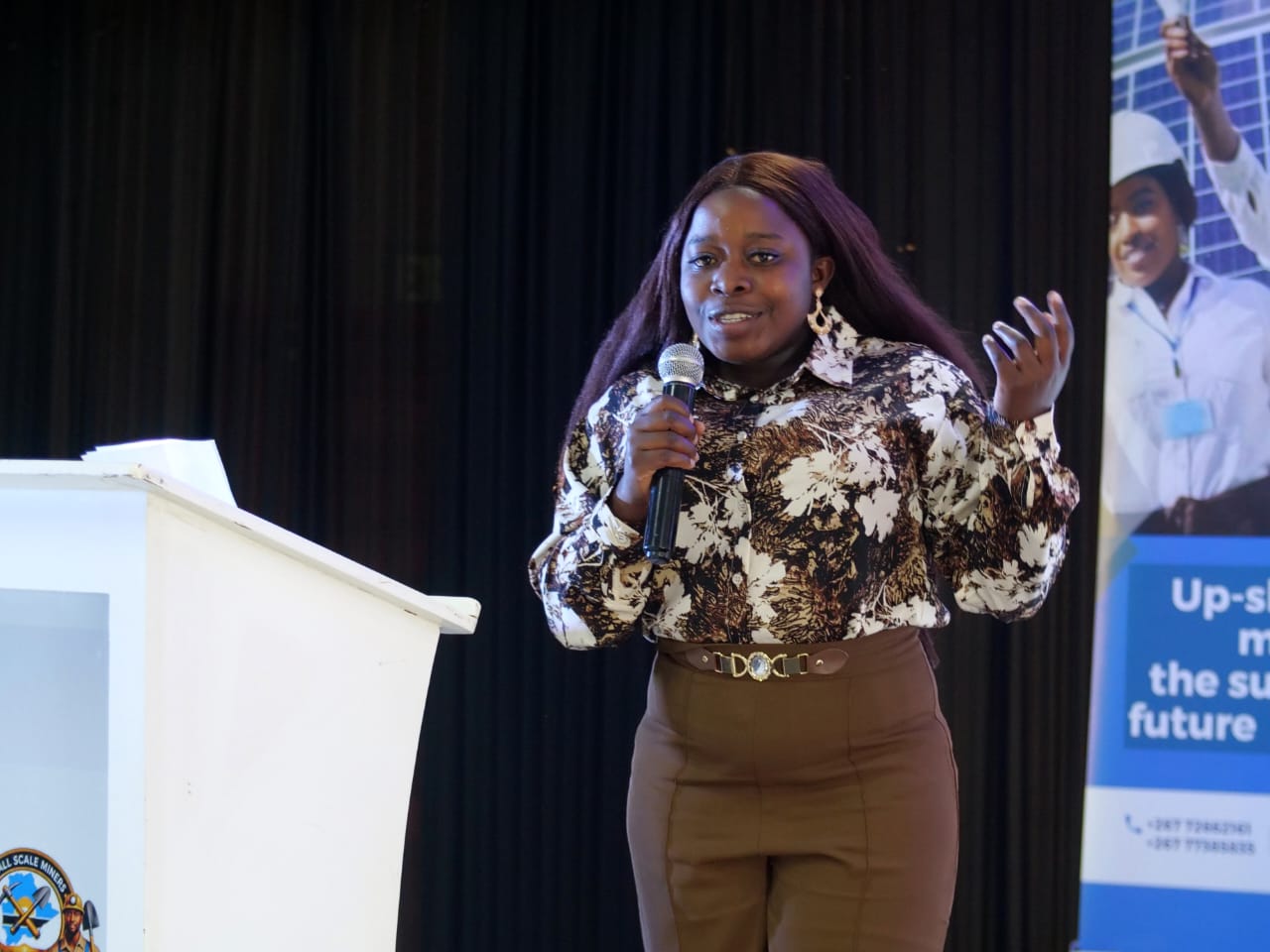
SOUTHERN Africa’s push to supply critical minerals for the energy transition must also protect the workers producing them, Zimbabwean innovator and safety advocate Melindah Kufeni told a SADC high-level engagement.
Kufeni called for stronger safety systems, wider use of technology and greater inclusion of women, young people and small-scale miners as the region seeks to benefit from rising demand for minerals used in electric vehicles, batteries and renewable energy.
“You don’t rise to your goals. You fail to your systems,” Kufeni told delegates. “So as the excitement around SADC critical minerals grows … let me ask you one question: Are our systems enough?”
The International Energy Agency says demand for critical minerals is rising rapidly as electric vehicles, battery storage, renewable power and electricity networks expand. In its 2023 net-zero scenario, demand for critical minerals was projected to grow 3.5 times by 2030.
SADC already has a regional framework for mining that calls for internationally recognised health, safety and environmental standards. Its Protocol on Mining also provides for regional coordination and encourages small-scale mining that supports economic empowerment.
Kufeni used driver fatigue to illustrate what she sees as a gap between safety policies and conditions on the ground.
“Night shift. 12 hours in. Eyes heavy. An alarm goes off. He’s too fatigued to respond. The supervisor only finds out after the accident,” she said. “We are not only losing production to equipment failure … We are losing it to eyelids.”
She said companies often protect equipment with sensors while relying on workers to manage fatigue themselves.
“We protect machines with sensors. But we protect people with coffee,” she said.
Kufeni said she had developed a drowsiness detection system using smart glasses designed to identify signs of fatigue, trigger automatic braking and send an alert to supervisors.
The details of the system, including its testing, cost and deployment, were not provided in the address.
The need for stronger safeguards extends to small-scale mining, where workers can face serious risks. The International Labour Organization says small-scale mines can have much higher accident rates than larger operations and has developed guidance covering safety in small-scale surface mining.
Kufeni also called for safety technology to reach workers who may have fewer resources.
“What is innovation when it is only reserved for those who can afford it? Our small-scale miners are contributing largely to this sector. Safety should never be a luxury. Safety must be a principle,” she said.
She urged SADC countries to build a regional innovation system in which ideas, funding and technical expertise can move across borders.
“SADC needs to lead. Not only in exporting minerals … But in pioneering the technologies that protect the people securing those critical minerals,” she said.
Women and young people should also have a stronger role in the sector, she said.
“PPE that doesn’t fit. Tech that doesn’t see us. Mentorship that isn’t there. From a woman in Zimbabwe to a youth in the DRC, our systems must see us,” Kufeni said.
The ILO says women make up less than a fifth of the estimated 21.4 million people working in the global mining industry and has called for measures to improve gender equality in large and small-scale mining.
Kufeni said young innovators should be given support to turn prototypes into products that can be tested and scaled.
“To the youth: you are not the future. You are the present. So, help us bridge the gap between prototypes and market-ready ideas. Fund us. Test us. Scale us,” she said.
Her message was ultimately about how mining success should be measured.
“Mining success measured in tonnes … is a win only once. But mining success measured by lives that return home … That’s a win for the generation,” she said.