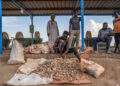
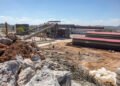
- Residents near a major cobalt mine report health problems.
- More than 12,000 people have reportedly been displaced.
- The mine disputes a direct link to the health claims.
ON a humid evening in Fungurume, the air around Manomapia carried a smell residents had come to fear. Families living beside Tenke Fungurume Mining’s sprawling copper-cobalt operation say fumes have left people coughing, suffering nosebleeds and, in some cases, seeking medical treatment for severe respiratory problems.
For people in the neighbourhood, the problem is not an abstract debate about cobalt or electric cars. It is about whether their children can breathe safely in the place they call home.
Manomapia sits beside TFM’s “30k” processing plant, which began operating in 2023 and is capable of processing 30,000 tonnes of ore a day, according to the Environmental Investigation Agency. TFM is owned by CMOC Group, one of the world’s biggest cobalt producers.
The plant has helped drive a rapid expansion of cobalt production in a country that supplies more than 70% of the world’s cobalt, according to the EIA. Cobalt is a key material in many electric vehicle batteries, linking what happens in this small Congolese community to a global push for cleaner transport.
But the growth has come with a bitter dispute over its cost.
A neighbourhood under pressure
The EIA and Congolese environmental group PremiCongo spent more than three years investigating conditions around TFM. Their March 2026 report examined more than 1,200 medical records, independent air monitoring, satellite and geospatial information, and interviews with residents and workers.
The investigation found that residents near the 30k plant had sought treatment for nosebleeds, persistent coughing, coughing up blood and other serious respiratory problems since the facility began operating. The EIA said the symptoms were consistent with exposure to sulfur dioxide, although that does not by itself establish that the plant caused the illnesses.
Some of the most painful accounts came from families with young children.
One mother told investigators that her six-month-old baby became ill and later died. She said doctors told her that the baby’s lungs had been attacked by acidic particles, according to the EIA’s report.
“This death was caused by air pollution,” the family told investigators, according to the EIA.
The report also describes residents complaining of itchy eyes, headaches, chest pain and persistent coughing. Some said they noticed a change in the air after the 30k plant began operating in 2023.
For families already living close to an industrial mine, moving is not always an option.
“We are poor people living next to a giant mine,” a community elder told investigators. “We cannot move away, and now our children are sick.”
Evidence under dispute
The EIA commissioned independent air monitoring in Manomapia between September 2024 and January 2025. It said sulfur dioxide levels exceeded World Health Organization guidelines on several occasions and remained above safe thresholds for hours at a time.
TFM has rejected the central claim that its operations caused the reported health problems.
The company said its own monitoring data from late 2024 and early 2025 showed ambient sulfur dioxide concentrations within regulatory limits and that there was no evidence establishing a direct link between the plant and health impacts in Manomapia.
The disagreement is now moving beyond competing reports.
In March, the EIA said TFM had acknowledged spikes in sulfur dioxide emissions in 2023 and 2024 after previously denying responsibility for the emissions. The DRC government announced an inspection, with the EIA saying it wanted the process to include independent observers and public disclosure of monitoring data.
That inspection could provide an important test of the competing claims.
When people lose more than land
Pollution is not the only concern raised by residents.
The EIA says more than 12,000 people have been displaced by TFM’s expansion since 2022, including people from Manomapia, Kabombwa and Kalweji. Residents told investigators that some received as little as $60 in compensation and that their living conditions had worsened after relocation.
“We were told to leave without proper consultation,” one displaced farmer told investigators.
For a farmer, losing land is not simply losing a piece of ground. It can mean losing food, income and the place where a family has lived for years.
Residents told investigators that some were asked to sign relocation agreements before they knew how much compensation they would receive. The EIA said residents also alleged that TFM kept the only copies of the signed agreements.
TFM’s expansion has therefore left two questions hanging over the community: what price should people pay for industrial growth, and who decides when that price is too high?
The clean-energy contradiction
The stakes reach far beyond Fungurume.
Cobalt from the DRC enters supply chains serving battery and automotive industries around the world. The EIA has identified links between TFM’s cobalt and major companies in the electric vehicle supply chain, while companies including Stellantis, Mercedes-Benz and BMW have responded to questions about their sourcing and relationship with TFM.
Stellantis said audits by a third-party partner had identified reported cases of relocation in the Manomapia area and that it would continue to engage with TFM on mitigation efforts.
Mercedes-Benz said it began an incident-management process after receiving the EIA’s findings in November 2025. It said its review had not found shortcomings related to sulfur dioxide emissions.
BMW said it does not have a direct supply relationship with TFM for copper or cobalt products, while acknowledging indirect links through suppliers, according to the company’s response to the EIA.
Umicore, which supplies battery materials, said it had not established a clear evidence-based causal link between TFM’s operations and specific health or environmental impacts.
That leaves consumers far from the mine facing a question that is harder to answer than whether an electric vehicle produces fewer emissions on the road.
Can certification protect communities?
The case also raises questions about the systems designed to make mining more responsible.
TFM was certified by The Copper Mark in 2024 as meeting all 31 of its criteria, according to the EIA. The mine is now also undergoing an assessment by the Initiative for Responsible Mining Assurance, or IRMA.
The contrast between certification and the allegations from communities has become one of the most important parts of the dispute.
If a mine can meet recognised responsible-mining standards while people living beside it report serious health and displacement problems, the question is not only whether the company complied with the rules. It is whether the rules and audits are capable of detecting what communities experience on the ground.
IRMA’s assessment could therefore matter beyond TFM.
A wider warning
The problems around Manomapia are part of a broader debate about the cost of the global energy transition.
Cobalt, copper, lithium and other minerals are essential to technologies that governments and companies are promoting as part of a lower-carbon future. But the mines producing those materials are often located in communities that have limited power over investment decisions, environmental monitoring and global supply chains.
Recent research has continued to raise concerns about pollution around industrial mining operations in Lualaba province, including communities near TFM and other large mines. A June 2026 statement from several civil society groups said studies across eight communities had found evidence of environmental harm linked to industrial mining, including concerns over water and soil pollution.
For Manomapia’s residents, however, the debate is much more immediate.
They are not measuring the energy transition in tonnes of cobalt or electric vehicles sold. They are measuring it in the air around their homes, the health of their children and what remains after a mine takes the land.
The DRC government now has an opportunity to test the competing evidence through its announced inspection. The results could determine not only what happened in Manomapia, but how much trust communities can place in the safeguards surrounding one of the world’s most important mineral supply chains.
For the people living beside the 30k plant, the issue is simpler.
“We want clean air and justice,” a Manomapia resident told investigators. “We cannot keep suffering while the world drives electric cars.”