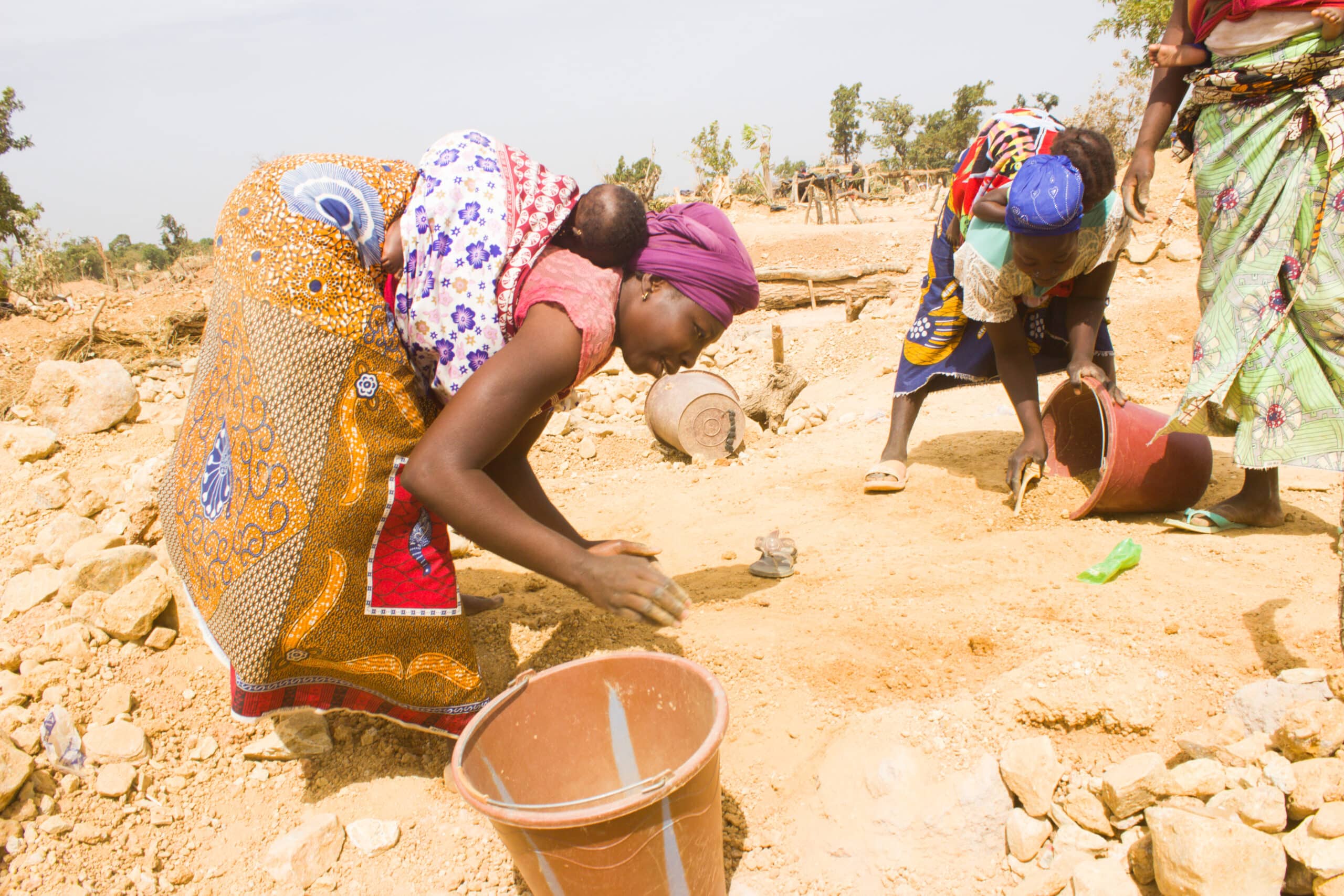
The Zimbabwe Artisanal and Small-Scale Women Miners Association has called for the Mines and Minerals Bill to be made gender-responsive, inclusive and practical for women miners.
ZASWMA is an association that represents women artisanal and small-scale miners across Zimbabwe’s eight mining provinces and advocates for formalisation, empowerment, financial inclusion, occupational health and safety, environmental sustainability and meaningful participation of women in mining.
ZASWMA said it recognises the importance of reviewing the existing Mines and Minerals Act to strengthen governance, improve transparency, promote responsible mineral exploitation, attract investment and enhance the contribution of mining to national economic development.
But it warns that legislative reform must be informed by the realities of how artisanal and small-scale mining is organised, financed and operated in Zimbabwe.
“Women miners face distinct structural and operational barriers, including limited access to mining claims, inadequate capital, difficulties in securing mining equipment, unequal participation in decision-making, insecure tenure, occupational health and safety risks and limited access to formal mining markets.”
ZASWMA said it was concerned that unless these realities were deliberately considered, some provisions of the proposed Bill may unintentionally disadvantage small-scale operators, particularly women who already experience significant barriers to entering and remaining in the mining industry.
“Our central position is that the reform of mining legislation must not simply regulate miners, it must also create an enabling environment in which miners, particularly women, can acquire, retain, develop, finance and safely operate their mining businesses.”
On governance, ZASWMA welcomes Clause 9 of the Bill, which says the Minister shall endeavour to secure equality of representation between the sexes and regions on the Mining Affairs Board, but says the wording is not enough.
“The use of the word ‘endeavour’ leaves room for unequal representation and does not guarantee that women will occupy decision-making positions.
“Their representation in mining governance must therefore be substantive rather than symbolic.”
ZASWMA proposes that the Bill be amended to require that women constitute at least 50 percent of the membership of the Mining Affairs Board, subject to the constitutional principles of gender equality and equal representation. It also calls for women to be represented in provincial mining governance structures and for the Ministry to maintain and publish gender-disaggregated statistics on mining title ownership.
On access to claims, ZASWMA said women must be recognised as independent economic actors with the same legal capacity to acquire and retain mining rights as their male counterparts.
It said women experience difficulties in accessing mining claims because of limited financial resources, discriminatory practices, lack of information, complicated registration procedures and dependence on male relatives or business partners.
ZASWMA proposes that discrimination in the allocation, registration, transfer and administration of mining titles on the basis of sex, gender or marital status be explicitly prohibited, and that women be able to independently register mining claims in their own names.
The Association also calls for simplified procedures for transferring mining rights to surviving spouses or lawful heirs following the death of a registered holder, without requiring the family to restart the entire pegging process, and for temporary protection of mining rights where a holder is unable to operate because of illness, bereavement, pregnancy, maternity-related circumstances or other compelling personal circumstances.
On financing, ZASWMA says small-scale mining is not always financed by one individual who owns a claim and independently provides all the resources required for production. It says many registered miners rely on joint ventures and partnerships, tribute agreements, sponsorship arrangements, member contributions and pooled resources, equipment-sharing arrangements and investors who provide pumps, compressors, generators, fuel and other operational inputs.
“For example, a single mining shaft may require approximately US$5,000 or more to establish and commence operations.
“A registered claim holder may therefore depend on several other people to mobilise the resources necessary to make the mine productive.”
ZASWMA warns that if these arrangements are restricted or made unnecessarily difficult to formalise, miners who cannot independently raise capital may lose access to the resources required to work their claims. It says this could undermine formalisation and reduce production rather than improve it.
The Association calls for lawful local joint ventures, partnerships, sponsorship arrangements, equipment-sharing agreements and member-funded mining models to be recognised, and for simplified and affordable registration procedures for legitimate cooperative financing and operational arrangements. It also proposes that the Ministry consider developing a dedicated regulatory framework or a separate Small-Scale Mining Act or Policy to address the specific operational, financial, social and safety characteristics of the ASM sector.
“The sector should not be regulated exclusively through provisions designed around the operational and financial capacity of large-scale mining companies,” the paper says.
On tribute agreements, ZASWMA says regulation is necessary but the associated costs and administrative requirements may discourage small-scale miners from formalising legitimate arrangements. It says the objective should be to formalise legitimate mining partnerships rather than inadvertently criminalise the arrangements through which small-scale mining is financed and operated.
On access to finance, the paper says limited access to finance remains one of the greatest barriers to the growth of artisanal and small-scale mining, and that most small-scale miners struggle to secure loans because they lack conventional collateral, despite holding registered mining claims. It proposes that registered mining titles be strengthened as assets capable of being used as security for financing, and calls for a Mining Title Guarantee Fund or similar risk-sharing mechanism.
“The declaration of a mineral as strategic should not become an unintended mechanism for transferring opportunities away from existing small-scale miners who lack the financial capacity to partner with large investors.”
On the Mining Cadastre Registry, ZASWMA welcomes its introduction as an important step towards transparency, improved administration and security of mining titles. It says, however, that the transition must be accompanied by accessible information and practical assistance, particularly for miners in rural and remote mining communities, and that cadastral searches should be affordable, with basic searches available at no cost or at a nominal fee.
On fees, the Association is concerned about fee structures that may charge miners for a standardised area even where their actual registered mining location is smaller. It gives the example of a miner holding a claim measuring seven, eight or nine hectares, saying the applicable fees should accurately reflect the actual registered area rather than automatically charging for ten hectares.
On classification, ZASWMA says a classification based solely on the number of workers may unintentionally penalise miners who expand operations, introduce additional shifts or employ more people to improve production and safety. It gives the example of a block containing five working shafts, with six workers on the day shift and six on the night shift at each shaft, which would involve 60 workers across the operation.
On cancellation and expropriation, ZASWMA says women miners may experience temporary interruptions because of illness, pregnancy, maternity-related circumstances, bereavement, caring responsibilities, limited access to capital, equipment breakdowns, flooding, dewatering challenges and other operational difficulties.
“A miner should not automatically lose a claim simply because production has been interrupted while the miner is making genuine efforts to mobilise resources and resume operations,” ZASWMA said. “The objective should be to promote productive mining without unfairly dispossessing miners who lack the resources to operate continuously.”
On health and safety, the Association says women in artisanal and small-scale mining face risks that are not always adequately recognised, including exposure to mercury, cyanide and other hazardous chemicals, inadequate sanitation, poorly designed protective clothing and equipment, physical strain, reproductive health risks, unsafe working environments, violence and harassment.
“Nothing about women’s occupational safety should be designed or implemented without the meaningful participation of women miners,” the paper says.
ZASWMA says the Mines and Minerals Bill, 2025 presents an important opportunity to transform Zimbabwe’s mining sector into a more transparent, productive, inclusive and sustainable industry. It says the success of the proposed reforms should not be measured only by increased production, investment or the number of registered mining titles.
“It should also be measured by whether ordinary miners, particularly women, can access mining opportunities, retain their titles, secure financing, operate safely, participate in decision-making and benefit economically from their work.
“Women should not simply be recognised as participants in mining. They must be recognised as mining rights holders, investors, employers, producers, business owners and decision-makers.
“The mining sector cannot achieve inclusive growth if the women who contribute to its development remain underrepresented, underfinanced and inadequately protected,” ZASWMA said.