- A Zimbabwean student developed smart glasses to detect driver fatigue.
- The prototype can automatically stop a mining vehicle.
- She is seeking mining partners to pilot the technology.
A SOON-to-graduate Mining Engineering student from Midlands State University has developed a prototype designed to reduce fatigue-related accidents in mines, earning recognition at one of Zimbabwe’s leading innovation competitions.
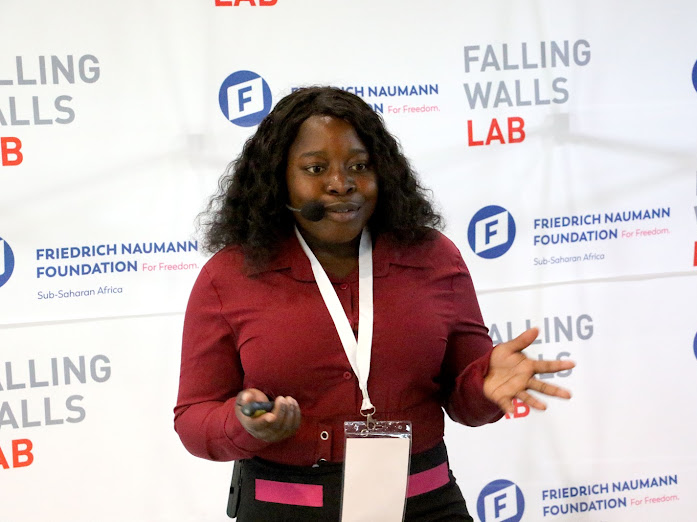
Melindah Kufeni finished second at Falling Walls Lab Zimbabwe 2026 after competing against researchers, entrepreneurs and PhD candidates. The competition attracted 104 applicants, with 15 finalists pitching breakthrough ideas in three minutes before a panel of judges.
Her innovation, called Smart Fatigue Detection Glasses, addresses one of mining’s biggest safety risks by combining fatigue detection with an automatic emergency response.
The prototype fits infrared sensors onto standard safety glasses worn by mine operators. When the system detects that a driver’s eyes have remained closed for more than three seconds, it first sounds an alarm.
If the driver fails to respond, the system automatically activates the vehicle’s braking system while sending an alert to a supervisor.
Unlike many existing fatigue-monitoring systems that rely on drivers responding to alarms, Kufeni’s prototype is designed to intervene if the operator remains unresponsive.
“The breakthrough isn’t another fatigue detector,” Kufeni said.
“It’s closing the gap between detection and action. Current systems can tell you a driver is tired, but if the driver doesn’t respond to the alarm, nothing happens. My system doesn’t wait. It stops the vehicle.”
She said prototype testing showed the sequence from detecting fatigue to stopping the vehicle took about 10 seconds, although the technology has not yet undergone independent validation.
Kufeni built the prototype herself using an Arduino microcontroller, infrared sensors and a GPS/GSM module. She said she received no institutional funding or research grants during development.
Because the technology is designed as a retrofit, it can be fitted to safety glasses miners already wear and connected to existing vehicle electronics. That could allow mining companies to adopt the system without replacing their fleets.
“I didn’t wait for someone to solve this problem,” she said. “I’m a mining engineer. I understand the mine. So I built the solution myself.”
Fatigue is widely recognised as a major safety challenge in mining, particularly for operators working long shifts in repetitive conditions. Studies have linked fatigue to slower reaction times, reduced awareness and a higher risk of vehicle incidents.
For Kufeni, the competition result was less important than the message it sent about young innovators tackling industry problems.
She said finishing second showed that a Zimbabwean student with a working prototype could compete alongside established companies and researchers. The recognition, she added, strengthened her determination to develop the technology further rather than marking the end of the project.
“Coming second is not the finish line. It is proof that this idea has value and deserves to go further,” Kufeni said.
Her immediate focus is securing partnerships with mining companies to pilot the technology under real operating conditions before pursuing wider commercial adoption.
Kufeni believes the system could eventually be adapted for other industries where fatigue poses a serious safety risk, including long-distance road transport.
“Maybe it’s time we measured mining success not only by the tonness we extract, but by the lives that return home.”
Falling Walls Lab is part of a global innovation programme that gives students, researchers and entrepreneurs three minutes to present breakthrough ideas addressing major scientific and social challenges. Winners from national competitions advance to the global finale in Berlin each November.