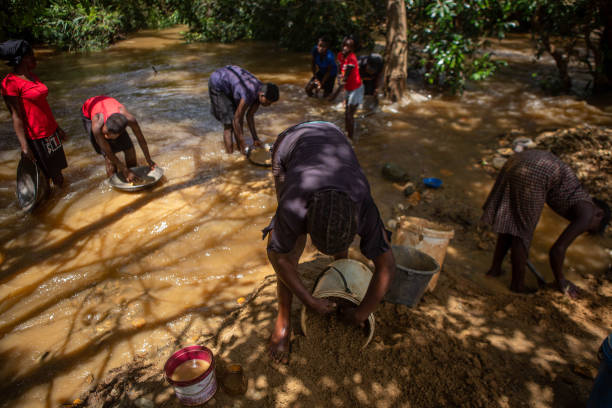
- Zimbabwe seeks to reduce mercury use in gold mining.
- planetGOLD targets 4.85 tonnes of mercury.
- Affordable mercury-free technology is key.
ZIMBABWE has called for stronger coordination across government and the gold sector to reduce mercury use in artisanal and small-scale gold mining, saying awareness campaigns and enforcement alone are insufficient.
Speaking on behalf of Environment and Climate Secretary Simon Masanga at the planetGOLD Zimbabwe Annual Conference, Acting Director of Environment Abraham Matiza said the country had reaffirmed its commitment to protecting human health and the environment by ratifying the Minamata Convention in 2021.
Under Article 7 of the convention, Zimbabwe developed a National Action Plan to reduce and, where feasible, eliminate mercury use in artisanal and small-scale gold mining.
“Our National Action Plan recognises that addressing mercury use requires more than awareness campaigns or enforcement alone. It calls for a coordinated approach that includes formalisation, eliminating harmful processing practices, reducing exposure to mercury, improving information for miners and communities, and promoting mercury-free technologies,” Matiza said.
The planetGOLD Zimbabwe project aims to prevent the release of 4.85 tonnes of mercury and support 7,500 miners and other beneficiaries, he said.
Matiza said the project’s impact should be assessed through changes in mining practices and community health, as well as the amount of mercury prevented from entering the environment.
“However, our success must ultimately be measured not only by the quantities of mercury avoided, but also by the positive changes we achieve in mining practices, environmental management and community health,” he said.
Mercury pollution can affect rivers, soils and biodiversity beyond mining sites, exposing nearby communities to environmental and health risks. Women, children and other vulnerable groups face particular risks, Matiza said.
He also warned that poorly managed mining contributes to land degradation, deforestation and water pollution, putting natural resources at risk.
Addressing these problems requires cooperation between environmental authorities, mining regulators, local authorities, traditional leaders, conservation agencies and mining communities.
“Protecting the environment cannot be the responsibility of one institution alone,” Matiza said.
He said mercury-free technologies must be practical, accessible and affordable for miners to adopt. Access to finance, skills training, responsible gold markets and institutional support would also help miners move away from mercury-based processing.
“Environmental compliance must be understood not simply as an obligation, but as an investment in safer communities, resilient ecosystems and a more responsible gold sector,” he said.
Matiza urged conference participants to agree on practical actions, assign clear responsibilities and build partnerships that would continue beyond the project’s lifespan. He also called for miners, particularly women, to have a greater role in shaping solutions.
“We must also ensure that the experiences and voices of miners, particularly women, inform the solutions we develop,” he said.