Mineral export earnings reached approximately US$5.73 billion in the first half of 2026, with small-scale miners accounting for 70 per cent of gold deliveries, but Mines and Mining Development Minister Dr. Eng. Polite Kambamura said the Ministry must now shift “from observation into dated, assigned and measurable action” to clear long-standing policy backlogs.
Addressing the 2026 Mid-Term Strategic Planning Review Workshop in Kadoma Today, Dr. Kambamura said the meeting was convened for accountability, not ceremony.
“This gathering gives us the platform to account for our performance during the period under review, to name our challenges and risks honestly, and, most importantly, to reset our priorities for the second half of the year so that we remain firmly on course,” he said.
“I ask that we come to this review with candour rather than presentation. We are not here to defend positions; we are here to improve delivery.”
Dr Kambamura said the sector’s performance was linked to national targets.
“The mining sector remains the cornerstone of Vision 2030, which seeks to transform our nation into ‘A Prosperous and Empowered Upper Middle-Income Society by 2030’, a vision championed by His Excellency, The President, Cde. Dr. E. D. Mnangagwa.
“Our work must, therefore, be aligned, in detail and not merely in language, with the National Development Strategy 2, which charts the definitive path towards realising that Vision.”
Dr. Kambamura reported a strong first half and a sharp jump in non-gold minerals.
“Total mineral export earnings, including gold, reached approximately US$5.73 billion in the first half of 2026, comprising US$2.532 billion marketed through the Minerals Marketing Corporation of Zimbabwe and approximately US$3.20 billion from gold,” he said.
“Excluding gold and silver, mineral exports rose by 84.7 per cent from US$1.37 billion in the corresponding period of 2025, a record performance. At this rate we expect to surpass both our 2026 targets and the US$8.6 billion recorded last year.”
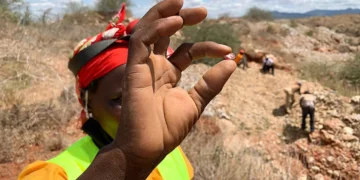
He highlighted the role of artisanal and small-scale miners in sustaining output.
“Of the 21.4 tonnes of gold delivered between January and June, our small-scale miners contributed 14.9 tonnes, or 70 per cent — a community that sustains the livelihoods of well over one million Zimbabweans,” Dr. Kambamura said.
But the Minister said progress on policy and administration had stalled.
“I must be equally candid about what has not moved. Key policies remain unlaunched years after they were drafted. A backlog of title applications persists. Disputes remain outstanding in the provinces and appeals remain pending at my level,” he said.
“These are not new observations, and that is precisely the problem. This workshop must convert observation into dated, assigned and measurable action.”
Dr. Kambamura said the three-day review should produce concrete plans with timelines and responsible officers to ensure the Ministry closes 2026 stronger and better aligned to Vision 2030 and NDS2.