New! The ZiMining August 2026 issue is here. Download your free copy
ZiMining
  • News
    • Breaking News
    • Editor’s Picks
    • Company News
    • Exploration & Discovery
    • Production & Operations
    • Zimbabwe
    • Global
  • Commodities
    • Gold
    • Copper
    • Lithium
    • Critical Minerals
    • Platinum Group Metals
    • Diamonds
    • Coal
  • Regions
    • Zimbabwe
    • Southern Africa
    • West Africa
    • East Africa
    • Central Africa
    • Global
  • Markets
    • Prices & Data
    • Mining Stocks
    • Companies
    • M&A & Deals
    • Finance & Investment
    • Junior Miners
  • Technology
    • Innovation & Technology
    • Automation & Robotics
    • AI & Data Analytics
    • Digital Mining
    • Equipment & Machinery
    • Safety Technology
  • Sustainability
    • Environment & Climate
    • Community Impact
    • ESG & Reporting
    • Decarbonisation
    • Water & Land Use
    • Women in Mining
  • Policy
    • Government & Regulation
    • Government & Policy Makers
    • Legislation & Compliance
    • Trade, Tax & Royalties
    • Risk Management
    • Artisanal & Small-Scale Mining
  • Insights
    • Editorials
    • Contributors
    • Commentary & Analysis
    • Blasted Zone
    • Industry Leaders
    • Special Reports
    • ZiMining Magazine
    • Events & Conferences
    • Research & Reports
  • Suppliers
  • News
    • Breaking News
    • Editor’s Picks
    • Company News
    • Exploration & Discovery
    • Production & Operations
    • Zimbabwe
    • Global
  • Commodities
    • Gold
    • Copper
    • Lithium
    • Critical Minerals
    • Platinum Group Metals
    • Diamonds
    • Coal
  • Regions
    • Zimbabwe
    • Southern Africa
    • West Africa
    • East Africa
    • Central Africa
    • Global
  • Markets
    • Prices & Data
    • Mining Stocks
    • Companies
    • M&A & Deals
    • Finance & Investment
    • Junior Miners
  • Technology
    • Innovation & Technology
    • Automation & Robotics
    • AI & Data Analytics
    • Digital Mining
    • Equipment & Machinery
    • Safety Technology
  • Sustainability
    • Environment & Climate
    • Community Impact
    • ESG & Reporting
    • Decarbonisation
    • Water & Land Use
    • Women in Mining
  • Policy
    • Government & Regulation
    • Government & Policy Makers
    • Legislation & Compliance
    • Trade, Tax & Royalties
    • Risk Management
    • Artisanal & Small-Scale Mining
  • Insights
    • Editorials
    • Contributors
    • Commentary & Analysis
    • Blasted Zone
    • Industry Leaders
    • Special Reports
    • ZiMining Magazine
    • Events & Conferences
    • Research & Reports
  • Suppliers
No Result
View All Result
ZiMining
Suppliers
No Result
View All Result
Home Features Risk Management

Essence of risk: Culture in sustaining an optimised risk management function

Jeremiah Ndhlovu by Jeremiah Ndhlovu
December 31, 2025
in Risk Management
Reading Time: 4 mins read
1
A A
0
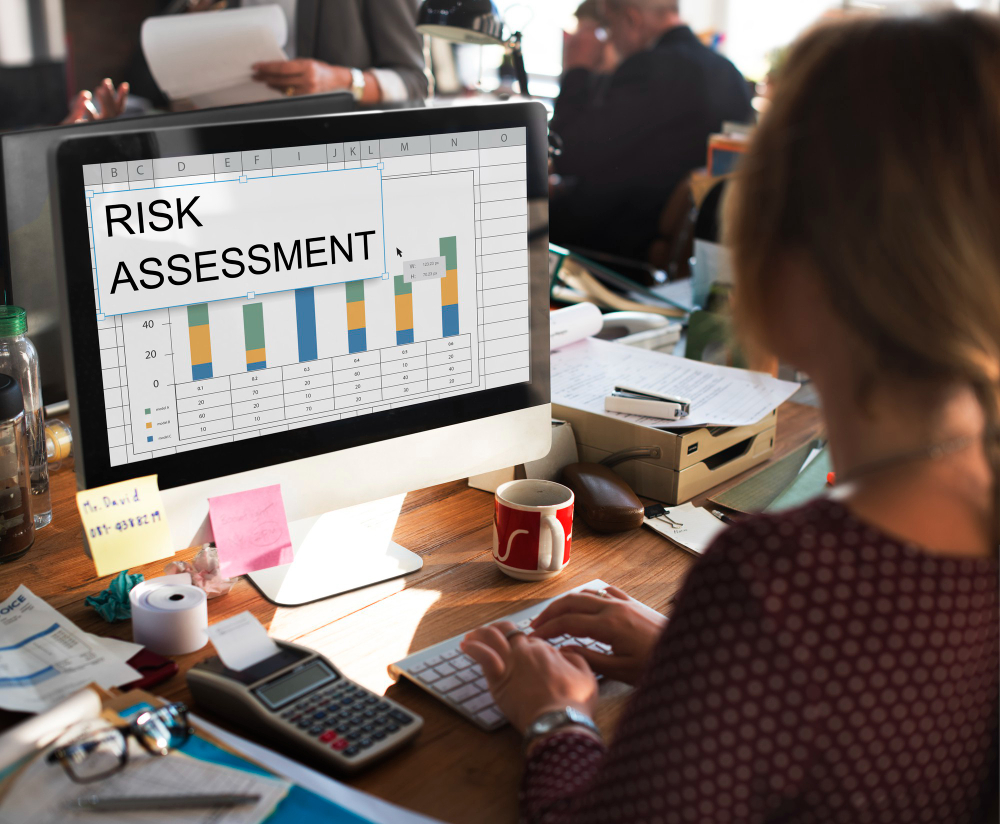
Person analysing a risk assessment chart on a computer screen in a busy office environment.

A staff member reviews a risk dashboard, but lasting risk management depends on culture, not just data.

106
VIEWS
Share on LinkedinShare on XShare on Facebook

Summary

  • Policies and frameworks are vital, but risk culture ultimately determines effective risk management.
  • Leadership tone, risk champions, and aligned incentives are key to embedding daily risk awareness.
  • Strong risk culture is a continuous journey requiring enforcement, reflection and organisational commitment.

Policies, frameworks and documentation alone are not enough to manage risk effectively. Sustainable risk management depends on organisational culture, the shared values, behaviours and leadership signals that shape how risk is understood and managed every day.

“You can’t go out and practice average on Wednesday, average on Thursday, okay on Friday and then expect to play well on Sunday.”— Tom Brady

Group of professionals analyzing charts in a meeting, highlighting leadership’s role in risk management.
Executives review performance charts during a strategy session, reinforcing the role of leadership in shaping risk culture.

In previous risk advisory articles, I focused extensively on what organisations must put in place to formalise risk management. This includes, among other things, documentation such as the risk strategy, risk appetite, risk management plan, risk management framework and risk management policy, collectively referred to as the risk management system.

Sell equipment, safety gear, chemicals or parts to mines? List your company for free and get seen by mining buyers across Zimbabwe.

This documentation is critical. It provides stakeholders with a clear reference point and signals an organisation’s deliberate approach to managing risk.

However, all of this counts for little if an appropriate risk culture is absent.

Why risk culture matters

Risk culture refers to the shared values, beliefs, attitudes and behaviours within an organisation regarding risk-taking and risk management. It influences how people respond to uncertainty, how decisions are made and how consistently risk considerations are embedded into daily work.

An organisation’s risk profile is shaped by diverse and dynamic factors. As a result, effective risk management cannot be sustained by a static system alone. Agility is essential to ensure organisations remain flexible enough to respond to changes in risk exposures as they arise.

While adherence to established risk management systems is important for discipline and consistency, rigid observance can leave organisations exposed, particularly when risk factors evolve after systems have been designed and approved.

It is therefore imperative to cultivate a culture that enables continuous identification of changes in the risk universe and residual risk profiles.

Risk management as a daily responsibility

The ideal position is one where every staff member, at all levels, understands the risks associated with their mandate and manages those risks — within the defined risk appetite — as an intrinsic part of everyday work.

Risk culture may appear simple in concept, but in practice it is complex. It is driven by multiple, dynamic factors that must be deliberately managed to achieve optimal results.

To develop and influence a strong risk culture, several key elements should be considered.

1. Tone at the top

Messages communicated by senior management and the board play a decisive role in shaping staff behaviour. When leadership consistently demonstrates commitment to risk management, either through decisions, actions and communication, the importance of risk awareness becomes embedded across the organisation.

Conversely, mixed signals or lax behaviour at the top quickly undermine even the most well-designed systems.

Four professionals in masks reviewing data on a laptop, illustrating cross-functional coordination in risk culture.
Risk champions collaborate across departments, reinforcing accountability and clarity in enterprise-wide risk management.

2. Risk champions

Coordination is critical in embedding a risk-aware culture. Formally appointing risk champions demonstrates organisational intent and provides a practical mechanism for driving enterprise-wide risk management practices.

Risk champions serve as reference points for staff seeking clarity, while reinforcing the importance of risk management across departments. Without such coordination, the success of risk initiatives is left largely to chance.

It is worth noting that successful risk management outcomes are rarely accidental; they are the result of deliberate and sustained action.

Four professionals in masks reviewing data on a laptop, illustrating cross-functional coordination in risk culture.
A traditional balance scale reflects the need for fairness, accountability and proportionate decision-making in risk culture.

3. Incentives and consequences

An organisation’s incentive structures must reinforce the desired risk behaviours. If appropriate risk management practices carry neither rewards nor consequences, they are easily disregarded.

Incentives should align with leadership messaging to avoid confusion. Good risk management behaviour should be recognised, while deliberate disregard for risk controls should attract proportionate consequences.

4. Action and enforcement

Even with the right tone, champions and incentives, risk culture will not take hold unless deliberate action is taken to reinforce good practices and address poor ones.

Enterprise-wide coordination of risk activities, combined with periodic evaluation of organisational risk culture, is essential. Where enforcement is weak or inconsistent, risk management is perceived as a “nice-to-have” rather than a core operational discipline.

In contrast, clear policies, consistent messaging and appropriate enforcement foster disciplined adherence to defined risk management measures.

An evolving journey

Building a strong risk culture is not a one-off exercise. It is an evolving journey that requires continuous reflection, reinforcement and refinement.

While a well-documented risk management system is important, it is the underlying culture that determines whether those systems are effectively implemented across the organisation.

Without a deliberate and sustained risk culture, even the most sophisticated risk management frameworks remain theoretical rather than operational.


Tags: Corporate GovernanceEnterprise Risk ManagementOrganisational LeadershipRisk Culture
Jeremiah Ndhlovu

Jeremiah Ndhlovu

Jeremiah Ndhlovu is the Managing Partner at Gallo Advisory, a firm he co-founded to provide governance, risk and compliance expertise across Sub-Saharan Africa. He is a Chartered Accountant (Zimbabwe) and a Certified Expert in Risk Management (CERM), with more than 17 years of experience in governance, risk, internal audit, external audit and financial leadership. Ndhlovu's career includes seven-country experience at EY and senior audit and governance roles at major Zimbabwean diversified groups. At Gallo Advisory, he advises clients on corporate restructuring, capital raising, ERP implementation, internal audit and risk management transformation.

Related Posts

Researchers working on rehabilitated waste-rock dumps at a mine in Namibia.
Commentary & Analysis

Mining’s value should outlast the ore body

by Jeremiah Ndhlovu
August 11, 2026
A mechanic pours engine oil into a vehicle engine during maintenance.
Breaking News

Lubricant distributors warn over counterfeit engine oils in Zimbabwe

by ZiMining
July 29, 2026
Aerial view of the Big Hole at Kimberley Diamond Mine, South Africa.
Africa

AI-powered geospatial analytics helps African mines detect risks earlier

by Sean Donegan
June 4, 2026
Next Post
ZiMining Magazine December 2025 cover.

ZiMining Magazine – December 2025 Edition

Leave a Reply Cancel reply

Your email address will not be published. Required fields are marked *

I agree to the Terms & Conditions and Privacy Policy.

Search ZiMining

No Result
View All Result

Most Read

  • Zimbabwe Mines Minister Polite Kambamura seated at a desk with the national flag behind him.

    Zimbabwe suspends raw mineral, lithium concentrate exports with immediate effect

    0 shares
    Share 0 Tweet 0
  • Small-scale miners seek more time to meet Aug. 30 deadline

    0 shares
    Share 0 Tweet 0
  • Goriwondo advocates engineer-led reforms at ZIE leadership

    0 shares
    Share 0 Tweet 0
  • Zimbabwe tightens grip on lithium exports, demands local processing push

    0 shares
    Share 0 Tweet 0
  • Zimbabwe explains rules for mineral exports

    0 shares
    Share 0 Tweet 0

Latest from ZiMining

Portrait of Zimbabwe Deputy Minister of Mines and Mining Development Caleb Makwiranzou

Zimbabwe pitches beneficiation drive to Australian investors after record mineral export half

September 4, 2026
A worker drives a vehicle at Zimplats' Ngwarati Mine in Mhondoro-Ngezi, Zimbabwe

Impala Platinum earnings soar, offsets help ease Zimbabwe cash lock-up

September 3, 2026
Hydrogen‑storage alloy ingots are displayed in the rare earth elements production section of the exhibition on China’s manufacturing achievements, in Beijing

China’s rare earth exports to US rise, easing pressure on aerospace sector

September 3, 2026
Mine surveyors using a total station to survey underground mine workings

Government pledges to work with mine surveyors’ body after Gumbie’s re-election

September 3, 2026
Raw copper from Zambia stored in a warehouse awaiting export at Newlyn Terminal, Bayhead, Durban, South Africa

India revives talks with Zambia to invest in critical minerals, sources say

September 2, 2026

Top Stories 24h

Government pledges to work with mine surveyors’ body after Gumbie’s re-election

Zimbabwe pitches beneficiation drive to Australian investors after record mineral export half

SADC urged to put worker safety at centre of critical minerals push

ZiMining

ZiMining is Zimbabwe's independent voice for mining, energy and natural resources.


We deliver factual reporting on policy, commodities, and critical minerals across Africa and global markets.


Subscribe to Market Brief

Work With Us

  • Careers
  • Advertise With Us
  • Supplier Directory
  • Submit Press Release
  • Market Brief Newsletter
  • Media Kit

Top Sections

  • Gold
  • Platinum & PGM
  • Critical Minerals
  • Policy & Regulation
  • Markets & Business
  • Company News
  • ESG Reporting
  • Sustainability

Company

  • About Us
  • Contact / Advertise
  • Magazines
  • Donate to ZiMining

© 2025 ZiMining - Exclusively Mining | Privacy Policy | Terms & Conditions

Welcome Back!

Login to your account below

Forgotten Password?

Retrieve your password

Please enter your username or email address to reset your password.

Log In
ZiMining Donation Banner
ZiMining

News without an agenda.

ZiMining is an independent publication with no corporate parent, no shareholders and no government influence. Our mission is journalism, not profit margins. Your donation supports independent reporting that serves the mining industry across Africa.

ZiMining Sliding Donation Card
No Result
View All Result
  • News
    • Breaking News
    • Editor’s Picks
    • Company News
    • Exploration & Discovery
    • Production & Operations
    • Zimbabwe
    • Global
  • Commodities
    • Gold
    • Copper
    • Lithium
    • Critical Minerals
    • Platinum Group Metals
    • Diamonds
    • Coal
  • Regions
    • Zimbabwe
    • Southern Africa
    • West Africa
    • East Africa
    • Central Africa
    • Global
  • Markets
    • Prices & Data
    • Mining Stocks
    • Companies
    • M&A & Deals
    • Finance & Investment
    • Junior Miners
  • Technology
    • Innovation & Technology
    • Automation & Robotics
    • AI & Data Analytics
    • Digital Mining
    • Equipment & Machinery
    • Safety Technology
  • Sustainability
    • Environment & Climate
    • Community Impact
    • ESG & Reporting
    • Decarbonisation
    • Water & Land Use
    • Women in Mining
  • Policy
    • Government & Regulation
    • Government & Policy Makers
    • Legislation & Compliance
    • Trade, Tax & Royalties
    • Risk Management
    • Artisanal & Small-Scale Mining
  • Insights
    • Editorials
    • Contributors
    • Commentary & Analysis
    • Blasted Zone
    • Industry Leaders
    • Special Reports
    • ZiMining Magazine
    • Events & Conferences
    • Research & Reports
  • Suppliers

© 2025 ZiMining - Exclusively Mining | Privacy Policy | Terms & Conditions

This website uses cookies. By continuing to use this website you are giving consent to cookies being used. Visit our Privacy and Cookie Policy.
Not enough quota to unlock this post
Unlock left : 0
Are you sure want to cancel subscription?