New! The ZiMining November 2026 issue is here. Download your free copy
ZiMining
  • News
    • Breaking News
    • Editor’s Picks
    • Company News
    • Exploration & Discovery
    • Production & Operations
    • Zimbabwe
    • Global
  • Commodities
    • Gold
    • Copper
    • Lithium
    • Critical Minerals
    • Platinum Group Metals
    • Diamonds
    • Coal
  • Regions
    • Zimbabwe
    • Southern Africa
    • West Africa
    • East Africa
    • Central Africa
    • Global
  • Markets
    • Prices & Data
    • Mining Stocks
    • Companies
    • M&A & Deals
    • Finance & Investment
    • Junior Miners
  • Technology
    • Innovation & Technology
    • Automation & Robotics
    • AI & Data Analytics
    • Digital Mining
    • Equipment & Machinery
    • Safety Technology
  • Sustainability
    • Environment & Climate
    • Community Impact
    • ESG & Reporting
    • Decarbonisation
    • Water & Land Use
    • Women in Mining
  • Policy
    • Government & Regulation
    • Government & Policy Makers
    • Legislation & Compliance
    • Trade, Tax & Royalties
    • Risk Management
    • Artisanal & Small-Scale Mining
  • Insights
    • Editorials
    • Contributors
    • Commentary & Analysis
    • Blasted Zone
    • Industry Leaders
    • Special Reports
    • ZiMining Magazine
    • Events & Conferences
    • Research & Reports
  • Suppliers
No Result
View All Result
ZiMining
Suppliers
No Result
View All Result
Home Equipment & Machinery
Sponsored by Zhengzhou Zhongji Machinery Co., Ltd. Zhengzhou Zhongji Machinery Co., Ltd.

Zhengzhou Zhongji Machinery Co., Ltd. is a mining-equipment manufacturer based in Zhengzhou, China. The company produces crushing, grinding, screening and conveying equipment for quarry, aggregate and mineral-processing applications.

Choosing a crushing plant: what the tonnage figure leaves out

Capacity is only one part of the equation. Feed characteristics, product requirements, internal recirculation and site conditions often determine whether a crushing plant delivers as expected

Ma Junxin by Ma Junxin
October 29, 2026
in Equipment & Machinery, Artisanal & Small-Scale Mining, Production & Operations, Research & Reports
Reading Time: 4 mins read
1
A A
0
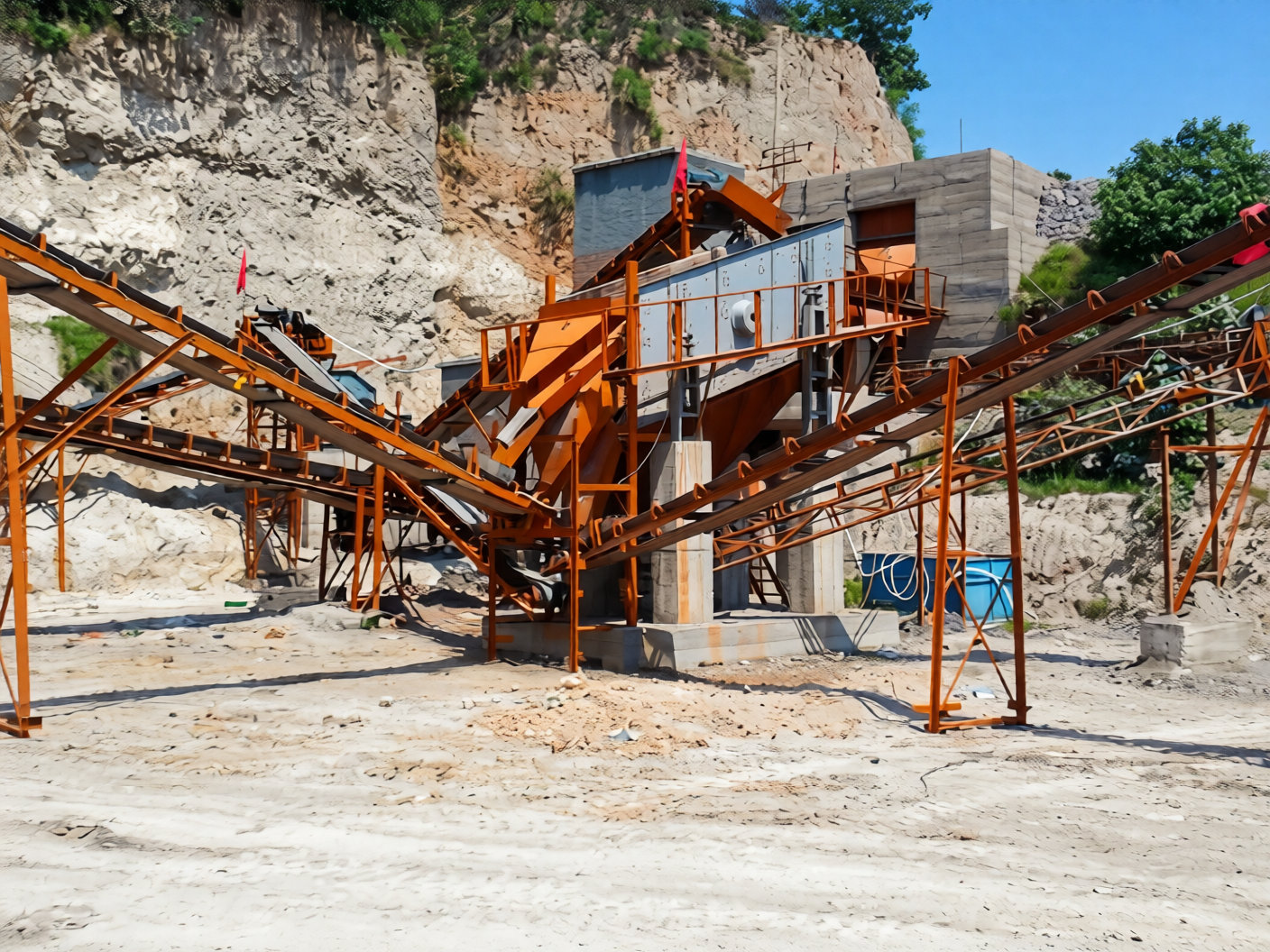
Aggregate screening conveyors and processing equipment at a Zhongji crushing and screening plant.

Conveyors and screening equipment operate at a Zhongji aggregate processing plant. Feed characteristics, product specifications and circuit design can be as important as throughput when selecting a crushing plant. (Image supplied by Zhengzhou Zhongji Machinery.)

69
VIEWS
Share on LinkedinShare on XShare on Facebook
  • A tonnage figure alone does not define a crushing plant, the author says.
  • Feed size, moisture and clay affect which equipment will work.
  • Buyers should define the required product before comparing quotes.
  • Closed circuits can overload screens and conveyors, the author says.

A REQUEST for a crushing plant often starts with one number: 100, 150 or 200 tonnes per hour. It is a useful starting point, but it does not yet tell a supplier what the plant has to do.

A quarry trying to make several saleable stone sizes and a gold-ore operation preparing material for a mill may ask for the same hourly capacity. They are not asking for the same circuit.

Sell equipment, safety gear, chemicals or parts to mines? List your company for free and get seen by mining buyers across Zimbabwe.

Before looking at crusher models, it is worth settling three questions: What exactly will enter the plant? What must come out? And what has to happen between the two? Most of the expensive misunderstandings begin when one of those answers is left open.

The feed is more than the biggest stone

The largest lump matters because it affects the feeder, crusher opening and the way material enters the chamber. But the rest of the feed matters just as much. A pile containing occasional large rocks and plenty of smaller material behaves differently from a consistently coarse, blocky feed.

A useful first description should include the material type, the largest expected piece and a representative idea of the size distribution. Photos with a scale are helpful, but where the investment justifies it, sampling and size analysis tell a more reliable story. One attractive photograph of clean rock should not be used to describe an entire deposit or borrow pit.

Moisture and clay are worth discussing early. Material that feeds and screens well when dry may become difficult to handle after rain. Fine, damp material may stick to the hopper or blind a screen.

In that situation the limiting point may be the feeder or screen rather than the crusher. Likewise, hardness, abrasiveness and unwanted metal affect machine choice, wear and maintenance. Uncertain or variable material properties may require testing before final sizing.

Start from the product, then work back

‘Crushed to 20 mm’ can sound precise, but it is not necessarily a finished-product specification. Does the buyer need one broad product, several closely graded fractions, or material of a suitable size distribution for the next grinding stage? Does the product have to meet a particular contract grading? Those are different duties.

For a quarry, a screen may be needed to separate the crushed stone into distinct products. Oversize may have to return for another pass. For an ore-processing project, the next stage may be a ball mill or another separation process, and a stable feed size distribution can matter more than making the crusher discharge as small as possible.

The discharge setting of an individual crusher does not, on its own, guarantee the final plant product.

This is where a seemingly cheap quotation can become misleading. A price for a primary crusher is not a price for an operating plant that produces the buyer’s required material. Feeders, screens, conveyors, return arrangements, chutes, controls, wear parts and installation scope all need to be understood before comparing proposals.

A plant has more than one capacity

It is also important to agree on what ‘150 tonnes per hour’ means. Is that fresh material entering the plant, material passing through one crusher, or saleable finished product leaving the screens? The numbers can be very different.

In a closed circuit, some material rejected by the screen goes back to a crusher. The screen, return conveyor and secondary crusher can therefore handle more material than the fresh-feed figure suggests.

If these components are sized only for incoming tonnes per hour, the internal circuit can become the bottleneck even when the crusher has spare capacity.

Operating hours are another missing detail. A plant required to produce a daily target in a short shift has a different duty from one running steadily over longer hours. Stops for inspection, liner changes and housekeeping also need to be considered.

A nominal machine rating should not be presented as a guaranteed production figure for every material or site.

The layout must work on the actual site

A crushing arrangement that looks tidy on a diagram still needs space for truck approach, feed stockpiles, product separation, dust control, safe access and wear-part replacement. If the working face is likely to move, the cost and frequency of relocating the plant also matter.

A mobile unit can shorten an upstream haul, but the finished material must still reach its next destination.

Power availability, foundations or ground conditions, access roads and the ability to obtain spares should be raised before equipment is ordered. These are not afterthoughts for commissioning: they can change which arrangement is practical in the first place.

What buyers should provide

At the enquiry stage, the buyer does not need every answer. A short, honest brief is enough to begin: material and source, expected maximum and typical feed sizes, moisture or clay condition, hourly and daily production targets, required products, available power, and a simple site sketch.

Mark unknown information as unknown rather than filling the gaps with guesses.

A good equipment proposal should then explain its assumptions. It should state which capacity is being quoted, what size range it expects to accept, what products the circuit is intended to deliver, what auxiliary equipment is included and which conditions still need to be confirmed.

That gives the mine or quarry operator a fair basis for comparison — and gives the supplier a better chance of proposing a plant that will actually suit the job.

Tags: Aggregate ProcessingCrushersCrushing PlantsEquipment SelectionMineral ProcessingMining equipmentPlant DesignProduction & OperationsQuarry OperationsScreening Plants
Ma Junxin

Ma Junxin

Ma Junxin represents Zhengzhou Zhongji Machinery, a mining-equipment manufacturer based in Zhengzhou, China. The company produces crushing, grinding, screening and conveying equipment for quarry and mineral-processing applications.

Related Posts

An artisanal miner sifts crushed ore slurry for gold particles at a small-scale gold mine in Zimbabwe.
Artisanal & Small-Scale Mining

Mercury-free gold technologies to be judged on recovery and cost, mines ministry says

by ZiMining
November 11, 2026
Molten gold being poured into moulds during a refining process.
Gold

Gold deliveries rise 10% as official says Zimbabwe can double output to 100 tonnes

by ZiMining
November 11, 2026
Nyasha Tauro of Performance Laboratories Zimbabwe, wearing glasses, a light blue blazer and a lanyard, seated at a table at the planetGOLD Zimbabwe conference
Artisanal & Small-Scale Mining

Small-scale miners urged to test ore before switching from mercury

by ZiMining
November 5, 2026
Next Post
Miners stand beside a crushing machine and bags of ore at a small-scale gold mining site in Chegutu, Zimbabwe

Field visits shift coverage of small-scale gold mining from crime to livelihoods, editor says

Leave a Reply Cancel reply

Your email address will not be published. Required fields are marked *

I agree to the Terms & Conditions and Privacy Policy.

Search ZiMining

No Result
View All Result

Most Read

  • Zimbabwe Mines Minister Polite Kambamura seated at a desk with the national flag behind him.

    Zimbabwe suspends raw mineral, lithium concentrate exports with immediate effect

    0 shares
    Share 0 Tweet 0
  • Mining sector tightens rules on fixed-term contracts

    0 shares
    Share 0 Tweet 0
  • Small-scale miners seek more time to meet Aug. 30 deadline

    0 shares
    Share 0 Tweet 0
  • Goriwondo advocates engineer-led reforms at ZIE leadership

    0 shares
    Share 0 Tweet 0
  • Zimbabwe explains rules for mineral exports

    0 shares
    Share 0 Tweet 0

Latest from ZiMining

An artisanal miner sifts crushed ore slurry for gold particles at a small-scale gold mine in Zimbabwe.

Mercury-free gold technologies to be judged on recovery and cost, mines ministry says

November 11, 2026
Molten gold being poured into moulds during a refining process.

Gold deliveries rise 10% as official says Zimbabwe can double output to 100 tonnes

November 11, 2026
Stockpiles of manganese ore at an industrial mineral handling facility.

Gabon courts Chinese investors for manganese processing as export ban nears

November 10, 2026
Hydrogen‑storage alloy ingots are displayed in the rare earth elements production section of the exhibition on China’s manufacturing achievements, in Beijing

China extends pause on rare earth export controls to January 10

November 10, 2026
Hardrock FC players in yellow and green striped kits line up on the pitch before a match

Gold-backed Hardrock and Scottland go to final day of Zimbabwe title race

November 6, 2026
ZiMining

ZiMining is Zimbabwe's independent voice for mining, energy and natural resources.


We deliver factual reporting on policy, commodities, and critical minerals across Africa and global markets.


Subscribe to Market Brief

Work With Us

  • Careers
  • Advertise With Us
  • Supplier Directory
  • Submit Press Release
  • Market Brief Newsletter
  • Media Kit

Top Sections

  • Gold
  • Platinum & PGM
  • Critical Minerals
  • Policy & Regulation
  • Markets & Business
  • Company News
  • ESG Reporting
  • Sustainability

Company

  • About Us
  • Contact / Advertise
  • Magazines
  • Donate to ZiMining

© 2025 ZiMining - Exclusively Mining | Privacy Policy | Terms & Conditions

Welcome Back!

Login to your account below

Forgotten Password?

Retrieve your password

Please enter your username or email address to reset your password.

Log In
ZiMining Donation Banner
ZiMining

News without an agenda.

ZiMining is an independent publication with no corporate parent, no shareholders and no government influence. Our mission is journalism, not profit margins. Your donation supports independent reporting that serves the mining industry across Africa.

ZiMining Sliding Donation Card
No Result
View All Result
  • News
    • Breaking News
    • Editor’s Picks
    • Company News
    • Exploration & Discovery
    • Production & Operations
    • Zimbabwe
    • Global
  • Commodities
    • Gold
    • Copper
    • Lithium
    • Critical Minerals
    • Platinum Group Metals
    • Diamonds
    • Coal
  • Regions
    • Zimbabwe
    • Southern Africa
    • West Africa
    • East Africa
    • Central Africa
    • Global
  • Markets
    • Prices & Data
    • Mining Stocks
    • Companies
    • M&A & Deals
    • Finance & Investment
    • Junior Miners
  • Technology
    • Innovation & Technology
    • Automation & Robotics
    • AI & Data Analytics
    • Digital Mining
    • Equipment & Machinery
    • Safety Technology
  • Sustainability
    • Environment & Climate
    • Community Impact
    • ESG & Reporting
    • Decarbonisation
    • Water & Land Use
    • Women in Mining
  • Policy
    • Government & Regulation
    • Government & Policy Makers
    • Legislation & Compliance
    • Trade, Tax & Royalties
    • Risk Management
    • Artisanal & Small-Scale Mining
  • Insights
    • Editorials
    • Contributors
    • Commentary & Analysis
    • Blasted Zone
    • Industry Leaders
    • Special Reports
    • ZiMining Magazine
    • Events & Conferences
    • Research & Reports
  • Suppliers

© 2025 ZiMining - Exclusively Mining | Privacy Policy | Terms & Conditions

This website uses cookies. By continuing to use this website you are giving consent to cookies being used. Visit our Privacy and Cookie Policy.
Not enough quota to unlock this post
Unlock left : 0
Are you sure want to cancel subscription?