ZiMining
  • News
    • Breaking News
    • Editor’s Picks
    • Company News
    • Exploration & Discovery
    • Production & Operations
    • Zimbabwe
    • Global
  • Commodities
    • Gold
    • Copper
    • Lithium
    • Critical Minerals
    • Platinum Group Metals
    • Diamonds
    • Coal
  • Regions
    • Zimbabwe
    • Southern Africa
    • West Africa
    • East Africa
    • Central Africa
    • Global
  • Markets
    • Prices & Data
    • Mining Stocks
    • Companies
    • M&A & Deals
    • Finance & Investment
    • Junior Miners
  • Technology
    • Innovation & Technology
    • Automation & Robotics
    • AI & Data Analytics
    • Digital Mining
    • Equipment & Machinery
    • Safety Technology
  • Sustainability
    • Environment & Climate
    • Community Impact
    • ESG & Reporting
    • Decarbonisation
    • Water & Land Use
    • Women in Mining
  • Policy
    • Government & Regulation
    • Government & Policy Makers
    • Legislation & Compliance
    • Trade, Tax & Royalties
    • Risk Management
    • Artisanal & Small-Scale Mining
  • Insights
    • Editorials
    • Contributors
    • Commentary & Analysis
    • Blasted Zone
    • Industry Leaders
    • Special Reports
    • ZiMining Magazine
    • Events & Conferences
    • Research & Reports
  • News
    • Breaking News
    • Editor’s Picks
    • Company News
    • Exploration & Discovery
    • Production & Operations
    • Zimbabwe
    • Global
  • Commodities
    • Gold
    • Copper
    • Lithium
    • Critical Minerals
    • Platinum Group Metals
    • Diamonds
    • Coal
  • Regions
    • Zimbabwe
    • Southern Africa
    • West Africa
    • East Africa
    • Central Africa
    • Global
  • Markets
    • Prices & Data
    • Mining Stocks
    • Companies
    • M&A & Deals
    • Finance & Investment
    • Junior Miners
  • Technology
    • Innovation & Technology
    • Automation & Robotics
    • AI & Data Analytics
    • Digital Mining
    • Equipment & Machinery
    • Safety Technology
  • Sustainability
    • Environment & Climate
    • Community Impact
    • ESG & Reporting
    • Decarbonisation
    • Water & Land Use
    • Women in Mining
  • Policy
    • Government & Regulation
    • Government & Policy Makers
    • Legislation & Compliance
    • Trade, Tax & Royalties
    • Risk Management
    • Artisanal & Small-Scale Mining
  • Insights
    • Editorials
    • Contributors
    • Commentary & Analysis
    • Blasted Zone
    • Industry Leaders
    • Special Reports
    • ZiMining Magazine
    • Events & Conferences
    • Research & Reports
No Result
View All Result
ZiMining
No Result
View All Result
Home Opinions Commentary & Analysis

Mining’s value should outlast the ore body

Sustainable mining can turn finite mineral wealth into lasting economic value, stronger communities and capabilities that survive beyond the life of a mine

Jeremiah Ndhlovu by Jeremiah Ndhlovu
August 11, 2026
in Commentary & Analysis, Africa, ESG & Reporting, Production & Operations, Risk Management, Sustainability, Zimbabwe
Reading Time: 5 mins read
1
A A
0
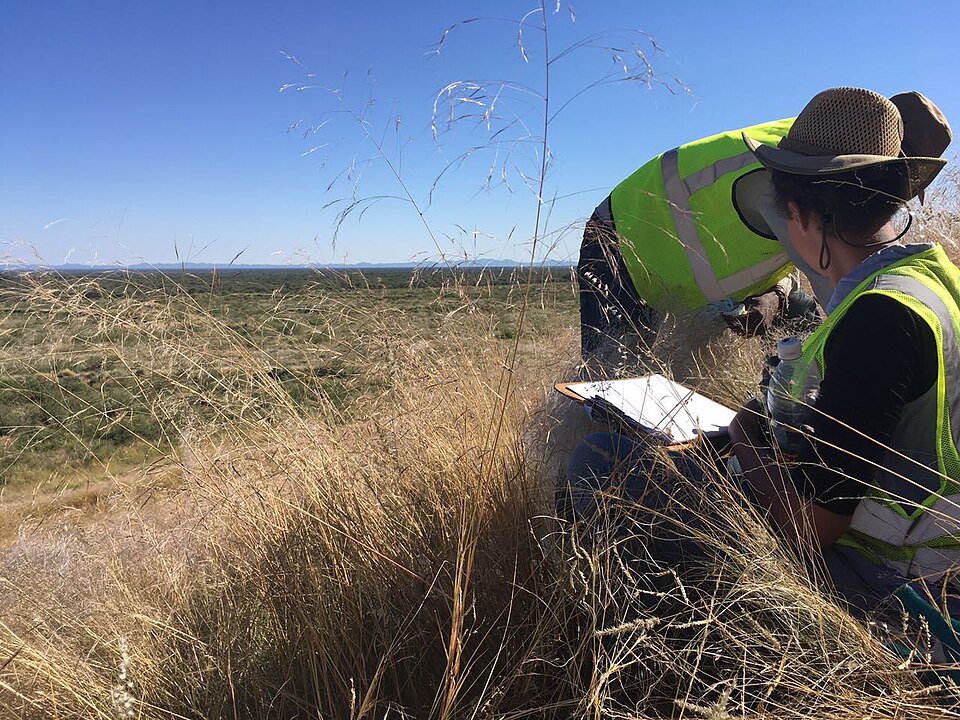
Researchers working on rehabilitated waste-rock dumps at a mine in Namibia.

Researchers work on rehabilitated waste-rock dumps at a B2Gold mine in Namibia. The image illustrates the role of progressive rehabilitation in sustainable mining. (Image: Miggan91/Wikimedia Commons)

46
VIEWS
Share on LinkedinShare on XShare on Facebook
  • Sustainability should be treated as a long-term business strategy, not simply a compliance cost.
  • Mining companies can create lasting value through environmental stewardship, community partnerships and stronger governance.
  • Greater beneficiation, resilience and local capacity can help Zimbabwe capture more value from its mineral wealth.

OPINION

“The nation that destroys its soil destroys itself.”

— Franklin D. Roosevelt, Letter to State Governors, 1937

Zimbabwe’s mineral wealth is finite. The value created from it does not have to be.

The country has a broad mineral base that includes lithium, gold, platinum group metals, chrome, nickel, coal and diamonds. Mining remains central to the economy, while government policy is increasingly focused on moving more minerals into local processing and higher-value activities.

For much of the past century, the model has been straightforward: extract, export and repeat. The question now is whether the way these minerals are extracted can create value that survives long after the ore body is exhausted.

Sustainability is too often treated as a compliance cost, like a box to be ticked or an obligation imposed from outside. That framing is a strategic error.

Sustainable mining is the discipline through which a finite resource can be converted into lasting economic, social and institutional value. The ore is depleted only once; the capabilities, infrastructure and relationships built around it can compound for decades.

Make environmental performance part of the business

Mining’s environmental footprint is not someone else’s problem.

Water use, land disturbance, tailings and energy consumption can create costs for both operators and surrounding communities. Research on mining areas in Zimbabwe has documented concerns including land degradation, water pollution and damage to local livelihoods.

Operators that design for closure from the first day of production can turn some of these future liabilities into planned business costs. Progressive rehabilitation, responsible tailings management, water recycling and more efficient energy use should form part of the mine plan rather than being left to the end of the operation.

In a country where energy and water can constrain industrial activity, environmental discipline is not philanthropy. It is operational resilience.

Build trust before problems start

A mining permit does not guarantee community acceptance.

Research from Zimbabwe’s mining districts has found that communities can carry significant environmental and social costs while receiving fewer of the benefits from mineral extraction. Studies have also highlighted problems around pollution, land loss, livelihoods and weak community influence over mining decisions.

A social licence cannot be purchased retrospectively once relations have soured.

It is built through local employment and procurement, structured skills transfer, transparent community development commitments and consultation that genuinely informs decisions rather than merely announcing them.

Where communities can see a clear link between the mine and better local opportunities, the relationship becomes more durable. That stability has value for the operator as well.

Make good governance an advantage

Capital is not indifferent to how mining projects are governed.

Investors, lenders and customers increasingly consider environmental and social risks alongside financial performance. Responsible mineral supply chains are also becoming more important as governments and companies seek to reduce risks linked to human rights, corruption and environmental damage.

For Zimbabwean operators, credible governance means more than publishing an ESG report.

It means clear board oversight, reliable disclosure, sound risk controls, transparent ownership structures and consistent compliance with the rules that govern mining.

Good governance reduces uncertainty. Lower uncertainty can make an asset easier to finance, partner and operate over the long term.

Capture more value from every tonne

Zimbabwe’s beneficiation agenda is fundamentally an economic strategy.

The government’s current development plan calls for more processing of minerals inside the country, including further beneficiation of lithium concentrates and platinum group metals. It also aims to move the lithium value chain towards lithium salts and, ultimately, battery-related products.

Every additional stage of processing can create opportunities for skills, suppliers, infrastructure and new businesses.

Sustainable value creation takes this further. Operators can recover saleable by-products, reprocess old tailings where economically viable and design production systems that make better use of materials and water.

This matters particularly for lithium and other minerals linked to the energy transition. Global supply chains are placing greater emphasis on knowing where critical minerals come from and how they move through the supply chain. The International Energy Agency and OECD say traceability is increasingly being used to support responsible and resilient mineral supply chains.

Traceability is not, by itself, proof of responsible production. But companies that can provide reliable information about the origin and handling of their minerals will be better placed to meet changing market and regulatory requirements.

Sustainability and competitiveness, in this light, are not opposing forces to be traded off against one another. Over any horizon that matters, they are increasingly the same thing.

Turn sustainability into action

For operators, four priorities stand out.

1. Plan for closure from day one.
Build progressive rehabilitation, tailings management and water stewardship into the mine plan and cost model from the start.

2. Build a real community compact.
Set clear commitments around local employment, procurement, skills and community development, and make consultation part of decision-making.

3. Make ESG reporting credible.
Put sustainability under clear board oversight and report performance consistently so investors, lenders, communities and other stakeholders can see what is being delivered.

4. Invest in resilience.
Build energy, water and skills capacity that strengthens the operation and supports greater value addition over time.

These measures are not separate from the business strategy. They are part of it.

The value must outlast the mine

Zimbabwe’s mineral wealth is finite. The opportunity is to use that wealth to build something that lasts longer than the mines themselves.

That means looking beyond the next shipment of ore and asking what remains when the mine closes: skilled workers, stronger suppliers, useful infrastructure, functioning institutions, healthier communities and businesses that can survive beyond extraction.

The operators who prosper over the long term will be those that understand this distinction. Sustainability is not a cost imposed on mining; it is the strategy through which a depleting resource can be turned into lasting capability, infrastructure and trust.

An ore body is exhausted in a matter of decades. The skills, institutions and goodwill built around it can endure far longer, but only if they are built deliberately, and built now.

Tags: BeneficiationCommunity developmentEnvironmental ManagementESGJeremiah NdhlovuLithiumMine RehabilitationMineral ProcessingMining InvestmentMining SustainabilityResponsible MiningRisk ManagementSocial Licence To OperateSustainable miningZimbabwe Mining
Jeremiah Ndhlovu

Jeremiah Ndhlovu

Jeremiah Ndhlovu is the Managing Partner at Gallo Advisory, a firm he co-founded to provide governance, risk and compliance expertise across Sub-Saharan Africa. He is a Chartered Accountant (Zimbabwe) and a Certified Expert in Risk Management (CERM), with more than 17 years of experience in governance, risk, internal audit, external audit and financial leadership. Ndhlovu's career includes seven-country experience at EY and senior audit and governance roles at major Zimbabwean diversified groups. At Gallo Advisory, he advises clients on corporate restructuring, capital raising, ERP implementation, internal audit and risk management transformation.

Related Posts

Miner inspecting a rock face underground in a mine.
Events & Conferences

ZINIRE seeks papers on technology and mine safety

by ZiMining
August 11, 2026
Aerial view of Caledonia Mining's Blanket Gold Mine in Zimbabwe. Title
Company News

Caledonia profit rises as Blanket gold output recovers

by ZiMining
August 11, 2026
Artisanal gold miners work at a mine site in Makaha, Mudzi.
Gold

Small-scale miners keep dominant share of Zimbabwe gold output

by ZiMining
August 9, 2026

Leave a Reply Cancel reply

Your email address will not be published. Required fields are marked *

I agree to the Terms & Conditions and Privacy Policy.

Search ZiMining

No Result
View All Result

Most Read

  • Zimbabwe Mines Minister Polite Kambamura seated at a desk with the national flag behind him.

    Zimbabwe suspends raw mineral, lithium concentrate exports with immediate effect

    0 shares
    Share 0 Tweet 0
  • Goriwondo advocates engineer-led reforms at ZIE leadership

    0 shares
    Share 0 Tweet 0
  • Zimbabwe tightens grip on lithium exports, demands local processing push

    0 shares
    Share 0 Tweet 0
  • Zimbabwe explains rules for mineral exports

    0 shares
    Share 0 Tweet 0
  • Retrenched diamond workers ask state to recover unpaid pensions

    0 shares
    Share 0 Tweet 0

Latest from ZiMining

Researchers working on rehabilitated waste-rock dumps at a mine in Namibia.

Mining’s value should outlast the ore body

August 11, 2026
Miner inspecting a rock face underground in a mine.

ZINIRE seeks papers on technology and mine safety

August 11, 2026
Aerial view of Caledonia Mining's Blanket Gold Mine in Zimbabwe. Title

Caledonia profit rises as Blanket gold output recovers

August 11, 2026
Artisanal gold miners work at a mine site in Makaha, Mudzi.

Small-scale miners keep dominant share of Zimbabwe gold output

August 9, 2026
Melindah Kufeni presents her Smart Fatigue Detection Glasses prototype at Falling Walls Lab Zimbabwe 2026.

Zim student develops smart glasses to tackle mining fatigue

August 6, 2026
ZiMining

ZiMining is Zimbabwe's independent voice for mining, energy and natural resources.


We deliver factual reporting on policy, commodities, and critical minerals across Africa and global markets.


Subscribe to Market Brief

Work With Us

  • Careers
  • Advertise With Us
  • Supplier Directory
  • Submit Press Release
  • Market Brief Newsletter
  • Media Kit

Top Sections

  • Gold
  • Platinum & PGM
  • Critical Minerals
  • Policy & Regulation
  • Markets & Business
  • Company News
  • ESG Reporting
  • Sustainability

Company

  • About Us
  • Contact / Advertise
  • Magazines
  • Donate to ZiMining

© 2025 ZiMining - Exclusively Mining | Privacy Policy | Terms & Conditions

Welcome Back!

Login to your account below

Forgotten Password?

Retrieve your password

Please enter your username or email address to reset your password.

Log In
ZiMining Donation Banner
ZiMining

News without an agenda.

ZiMining is an independent publication with no corporate parent, no shareholders and no government influence. Our mission is journalism, not profit margins. Your donation supports independent reporting that serves the mining industry across Africa.

ZiMining Sliding Donation Card
No Result
View All Result
  • News
    • Breaking News
    • Editor’s Picks
    • Company News
    • Exploration & Discovery
    • Production & Operations
    • Zimbabwe
    • Global
  • Commodities
    • Gold
    • Copper
    • Lithium
    • Critical Minerals
    • Platinum Group Metals
    • Diamonds
    • Coal
  • Regions
    • Zimbabwe
    • Southern Africa
    • West Africa
    • East Africa
    • Central Africa
    • Global
  • Markets
    • Prices & Data
    • Mining Stocks
    • Companies
    • M&A & Deals
    • Finance & Investment
    • Junior Miners
  • Technology
    • Innovation & Technology
    • Automation & Robotics
    • AI & Data Analytics
    • Digital Mining
    • Equipment & Machinery
    • Safety Technology
  • Sustainability
    • Environment & Climate
    • Community Impact
    • ESG & Reporting
    • Decarbonisation
    • Water & Land Use
    • Women in Mining
  • Policy
    • Government & Regulation
    • Government & Policy Makers
    • Legislation & Compliance
    • Trade, Tax & Royalties
    • Risk Management
    • Artisanal & Small-Scale Mining
  • Insights
    • Editorials
    • Contributors
    • Commentary & Analysis
    • Blasted Zone
    • Industry Leaders
    • Special Reports
    • ZiMining Magazine
    • Events & Conferences
    • Research & Reports

© 2025 ZiMining - Exclusively Mining | Privacy Policy | Terms & Conditions

This website uses cookies. By continuing to use this website you are giving consent to cookies being used. Visit our Privacy and Cookie Policy.
Not enough quota to unlock this post
Unlock left : 0
Are you sure want to cancel subscription?