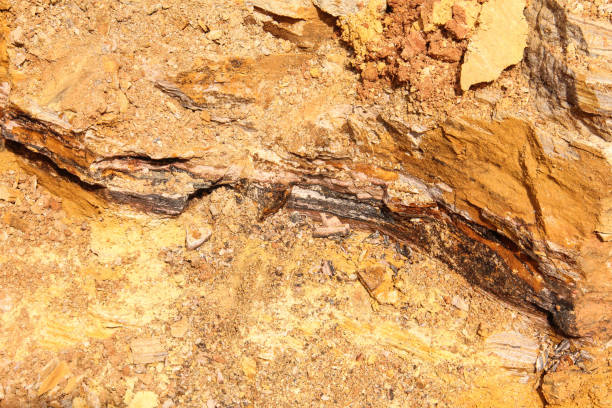
AFRICA’S vast reserves of cobalt, lithium and manganese are drawing multinational companies racing to secure supplies for the global energy transition.
Mining giants such as Glencore, China’s CMOC Group and Anglo American now dominate extraction across the continent, placing Africa at the centre of electric vehicle and renewable energy supply chains.
The push has gathered pace since the African Union adopted the Africa Mining Vision in 2009, which calls for mining to support broader economic development. More than a decade on, critics say most countries continue to export raw minerals rather than higher-value processed products.
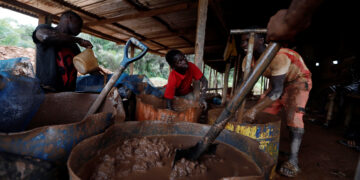
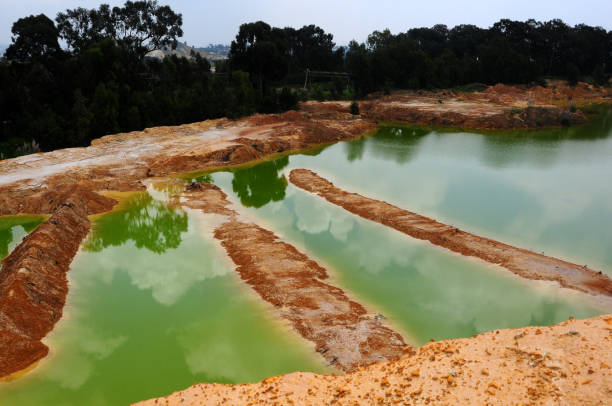
Communities near mining operations are often paying the highest price. Human Rights Watch has documented cases in South Africa where residents report polluted water, unsafe air and intimidation linked to mining projects.
“We know our lives are in danger,” said Nonhle Mbuthuma, a spokesperson for the Amadiba Crisis Committee, which opposes mining developments in the Eastern Cape.
The Democratic Republic of Congo supplies about 70% of the world’s cobalt, while Zambia remains a leading copper producer. Zimbabwe and Namibia are emerging as lithium suppliers, according to the US Geological Survey and the International Council on Mining and Metals.
These minerals are now critical to global supply chains, but the economic benefits for host countries remain uneven. Analysts say much of the value continues to accrue offshore.
Economists argue that processing minerals locally could change that balance. A World Bank mission in 2025 said beneficiation would help create jobs, diversify economies and increase government revenues.
Brookings Institution analysts say partnerships with the United States and Europe could also help African countries move up the value chain.
Governance remains a major concern. Transparency International and the Extractive Industries Transparency Initiative say weak oversight and corruption continue to divert mining revenues that could fund schools, hospitals and infrastructure.
“The stakes are higher than ever,” EITI said in a 2025 report, urging governments to improve contract transparency and public access to data.
Environmental groups warn that the surge in mining could deepen ecological pressures. Greenpeace Africa said in October 2025 that the continent faces “crunch time” as rising mineral demand threatens forests, biodiversity and water systems.
Studies by UN agencies link mining expansion to land degradation and growing climate vulnerability.
Workers and local communities often see limited gains. A July 2025 report by South Africa’s Mail & Guardian said the mining sector supports nearly five million people indirectly, but many face low wages, unsafe conditions and declining land quality.
Some policy groups are calling for alternatives. Research by Power Shift Africa and the International Renewable Energy Agency suggests that recycling and renewable technologies could reduce reliance on new extraction.
The UN Economic Commission for Africa has also urged stronger regional cooperation, saying intra-African trade could help ensure mining benefits are shared more equitably.
Africa’s mineral wealth is beyond dispute. Whether it delivers lasting prosperity or repeats old patterns of extraction will depend on governance, value addition and the influence of communities living closest to the mines.