ZIMBABWE’S Mines and Mining Development Ministry says the Zimbabwe School of Mines is reshaping its training model to support skills development and the formalisation of artisanal and small-scale mining.
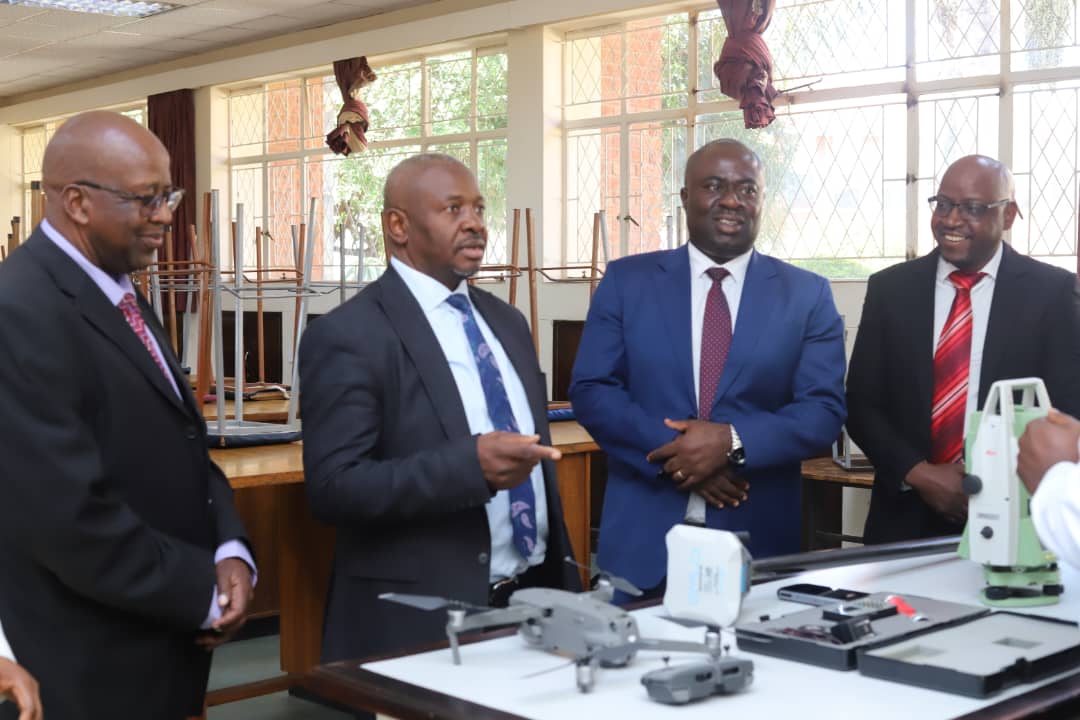
Permanent Secretary Dr Thomas Utete Wushe said during a visit to the school that its governance structure brings together government oversight, participation from the mining industry and a strategic development partnership.
Wushe said the approach was intended to move the school beyond traditional mining training and support the government’s Education 5.0 priorities, which emphasise innovation, industrialisation and the practical application of knowledge.
“The Zimbabwe School of Mines is no longer just training extractors,” Wushe said. “Through this Public-Private Partnership model, we are building a student-centred institution that drives beneficiation, industrialisation, and regional integration. That is Education 5.0 in action.”
Zimbabwe’s Education 5.0 policy has been linked by the government to efforts to increase innovation, industrialisation and practical skills in higher education. A 2023 government report said the policy had been supported by infrastructure such as innovation hubs, industrial parks and technology hubs at institutions of higher learning.
The School of Mines is also promoting its Certificate in Principles of Responsible Small-Scale Mining, or PRSM, as part of efforts to improve standards in the artisanal and small-scale mining sector.
Wushe said the programme would cover technical skills, occupational safety and health, environmental management and financial management.
“We cannot talk about mining growth without talking about lives. Reducing accidents, cutting mercury use, and enforcing OSH protocols are non-negotiable,” he said.
The proposed 40-hour curriculum covers seven areas: mining methods, occupational safety and health, mine transportation, drilling and blasting, mineral processing, mine finance and planning, and mining regulatory frameworks.
The programme is aimed at artisanal and small-scale mining operators, women and young miners, mining representatives, government institutions, law enforcement agencies and financial stakeholders, according to the ministry.
Wushe said the programme was intended to help move artisanal and small-scale mining towards more formal and professional operations.
“Artisanal and small-scale mining must move from survival activity to a professional sector,” he said. “The PRSM program gives miners modern techniques, safety standards, and financial skills so they can operate legally, profitably, and sustainably.”
The focus on formalisation comes as artisanal and small-scale mining remains an important part of Zimbabwe’s mining economy. A 2018 study by Pact found that artisanal and small-scale gold mining made a significant contribution to Zimbabwe’s gold sector and provided livelihoods, while also identifying challenges linked to formalisation and access to finance.
A separate 2018 University of Zimbabwe research paper argued that effective formalisation would require appropriate training, coordination among stakeholders and stronger institutions capable of implementing formalisation programmes.
The School of Mines has also proposed making the PRSM qualification a statutory requirement for small-scale mining title holders. The proposal, presented to a Ministry delegation led by Wushe in June, would require a certified responsible person at each site, according to Mining Zimbabwe.
The ministry’s current push also includes strengthening practical mining skills and technical capacity. Its website said recent equipment donated by the United Nations Development Programme to the School of Mines would support practical training, innovation and the adoption of emerging technologies.