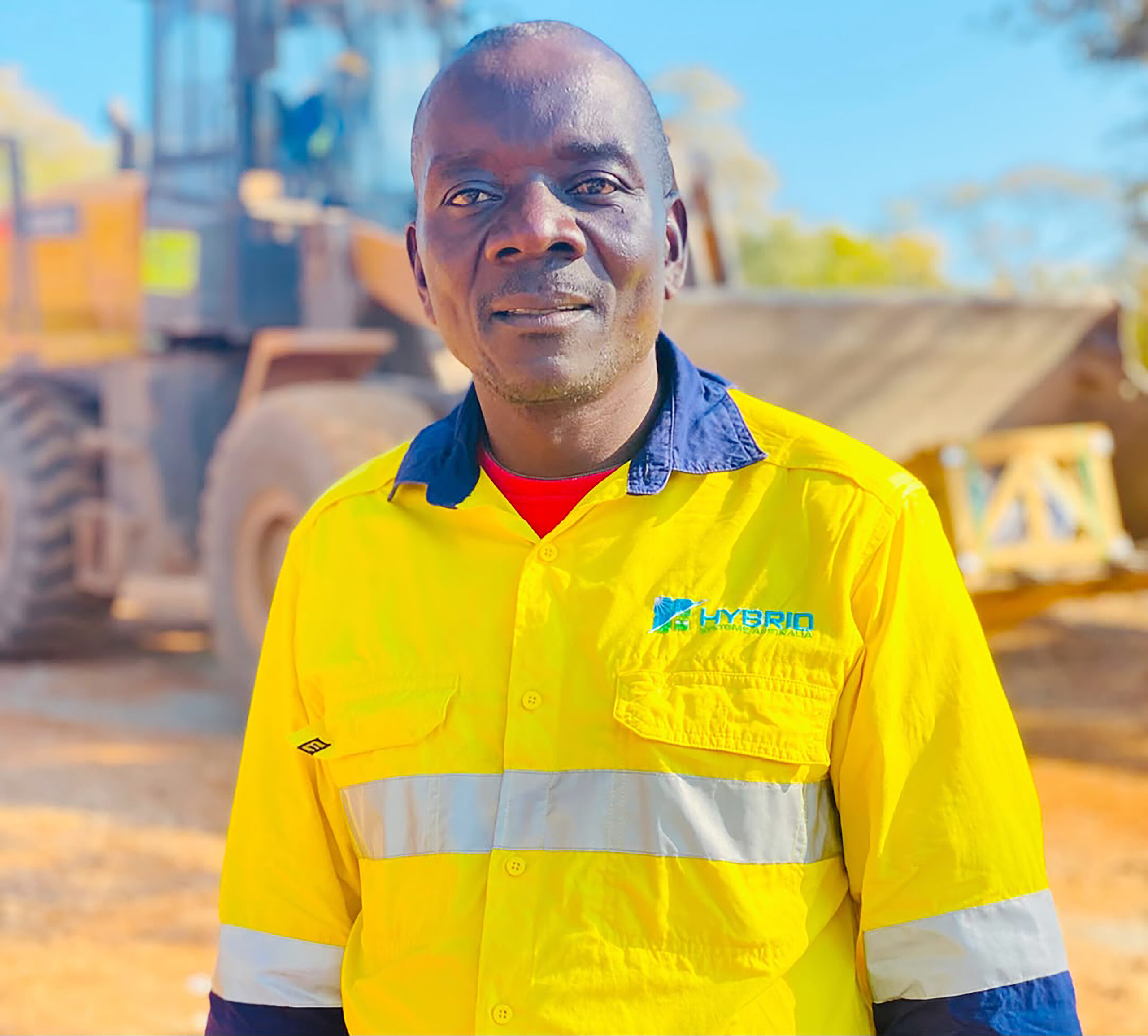
In 2022, Elimas Mlambo walked into RAM Mining Solutions as a qualified Boilermaker. His job was to fix and fabricate. Three years later, he’s running the entire crushing operation.
For Mlambo, the jump from tradesman to Crushing Superintendent wasn’t about chasing a title. It was about ownership — asking _why_ equipment failed instead of just repairing it, volunteering for breakdowns, and learning the process from operators and metallurgists.
In this interview, Mlambo takes us through a day in the crushing plant where it’s “60% people, 30% equipment, 10% paperwork,” how he balances throughput, quality and safety, and why RAM’s culture of promoting from within made him believe he didn’t have to leave to grow.
Elimas you joined RAM Mining in 2022 as a qualified Boilermaker and are now Crushing Superintendent. What did that progression look like, and what drove you to push for more?
I started as a Boilermaker in 2022. My focus was on understanding not just how to fabricate and repair, but _why_ things were failing. I volunteered for breakdowns, asked questions during shutdowns, and learned the process side from the operators and metallurgists.
What drove me was ownership. I saw gaps in how we were maintaining equipment and wanted to be in a position to fix the root causes, not just the symptoms. With support from management and consistent results, I moved into team lead, then section supervisor, and now Superintendent. It’s been about learning, delivering, and building trust.
What was it about RAM Mining that made you believe there were real opportunities to grow from within?
RAM gives you room to prove yourself. Leadership here notices initiative. If you show competence and care about the business, you get opportunities.
I’ve seen colleagues move from trades into technical and supervisory roles. That culture made me believe I could grow without having to leave. The company invests in people who invest in the company.
Moving from technical trades to a superintendent role is a big step. What was the toughest part of that transition for you?
The shift from “doing” to “enabling others to do.” As a Boilermaker I could fix it myself. As Superintendent I had to learn to plan, delegate, and coach.
The toughest part was balancing production pressure with people development. You can’t just chase tonnes. You have to build a team that can deliver tonnes safely and consistently. Learning to trust my team and communicate the “why” behind decisions was key.
As Crushing Superintendent, you oversee plants, equipment performance, production targets and personnel. Walk us through what a typical shift looks like for you.
My day starts with a walk-through. I check plant status, look at overnight reports, and do a safety interaction with the crew.
Then we review targets vs actuals: feed rate, throughput, power draw, and wear rates. I’ll meet with maintenance, process, and logistics to align on the day’s priorities.
Through the shift I’m in the plant – checking vibration readings, liner wear, dust suppression, and talking to operators. At handover I make sure the next crew has clear instructions and any risks are flagged. It’s 60% people, 30% equipment, 10% paperwork.
Crushing is one of the most critical functions in mining. How do you balance throughput, quality, and equipment reliability on a daily basis?
You can’t maximize one at the expense of the others or the plant will punish you. We set a daily plan based on ore type and downstream requirements. Then we monitor CSS, liner profile, and motor loads in real time. If we push too hard we get breakdowns. If we go too slow we miss targets.
The balance comes from data + experience. We run to a stable operating window and only make step changes when we understand the impact on wear and product size.
What are the key metrics you watch to know if the crushing plant is performing at its best?
Safety first – no incidents, no near misses.
Operational: Throughput tph, availability %, utilization %, crusher power draw, CSS, and product P80.
Reliability: Mean time between failures, liner life, unplanned downtime.
Cost: Cost per tonne crushed, and maintenance spend vs budget.
If those are green, we know the plant is healthy.
Crushing plants can be high-risk environments. What systems or habits have you put in place to keep your crew safe?
We treat safety as a habit, not a checklist.
Key things: Daily pre-start checks, strict LOTO for any work, no-go zones around running crushers, and toolbox talks before every shift.
I do regular field interactions and we investigate every near miss. The team knows they can stop work if something feels unsafe. We also focus on housekeeping – dust and spillage are slip and respiratory hazards. A clean plant is a safe plant.
You were recognised for technical competence and leadership as a Boilermaker. How do those technical roots help you lead the crushing team today?
It gives me credibility. When I talk to artisans about a weld crack or a misaligned pulley, I’ve been there. The team knows I understand the job.
More importantly, it taught me problem-solving. In boilermaking you learn to look at the whole structure. I bring that same systems thinking to the crushing circuit – how feed, crusher, and conveyors all interact.
Elimas what are you most proud of achieving so far at RAM, and what’s the next milestone you’re working toward for the crushing department?
I’m most proud of the team we’ve built and the reduction in unplanned downtime we’ve achieved in the last year. We’ve moved from firefighting to planning.
Next milestone: Improve overall equipment effectiveness by 10% and extend liner life through better feed control and monitoring. We’re also working on upskilling 2 team members into senior operator roles so we continue to grow talent from within.