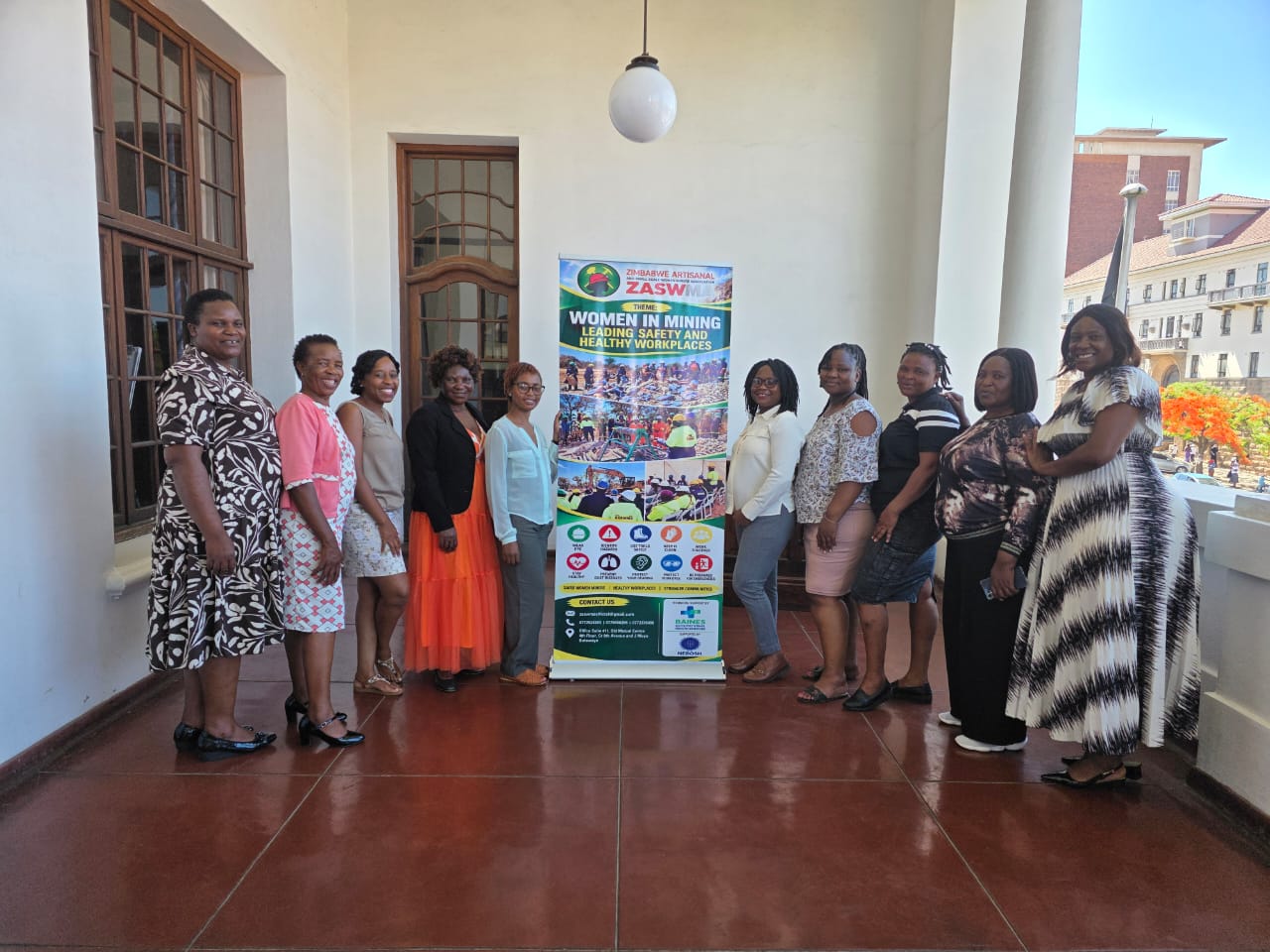
The Zimbabwe Artisanal and Small-Scale Women Miners Association (ZASWMA) is putting safety training directly in the hands of women miners, following a project rollout and capacity-building workshop held at Bulawayo today.
The training, part of the association’s three-year Occupational Health and Safety (OHS) programme, brought together the implementing team and association leadership to sharpen skills in project delivery, safeguarding, reporting, documentation and financial accountability.
It comes after lessons learnt from the Mazowe pilot activity, where ZASWMA identified gaps in coordination and communication that needed to be fixed before the programme scales to more mining communities.
The main outcome of the Bulawayo engagement was the drafting of practical training notes and the start of work on an OHS handbook for artisanal and small-scale miners.
The handbook will break down good safety practices, hazard identification, risk assessment and the prevention of occupational diseases into simple language that can be used at mine sites.
Organisers said the goal is to move safety information from boardrooms to the ground, so that women miners can teach and apply it themselves.
“A safer mining sector begins with knowledgeable miners and a well-equipped implementation team,” a ZASWMA official said. “We are making sure that knowledge sits with the women who are in the pits every day.”
The official said women make up a large part of Zimbabwe’s artisanal and small-scale mining workforce, and they are now leading the push for safer and healthier workplaces in their communities.
The association thanked its partners for supporting the initiative. ZASWMA acknowledged SOM and Baines Occupational Health and Safety for technical support, and NEBOSH for funding the capacity-building training.
“Without the support of our partners, this important work would not be possible,” the official said. “Together, we are strengthening the foundations for safer, healthier and more resilient mining communities.”
ZASWMA said the newly trained team will now take the training materials back to grassroots mining areas, where they will roll out safety education in accessible language that miners can immediately use.
“Women in mining are leading safety and healthy workplaces,” the official said.