Media field visits are transforming how artisanal and small-scale gold mining (ASGM) is reported and understood, moving coverage from criminalization to a solutions-based livelihood narrative, ZiMining Managing Editor Kundai Chidamba has said.
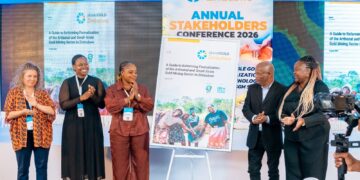
Speaking during the planetGOLD Zimbabwe Annual Stakeholders Conference 2026, Chidamba said media tours to mining sites had fundamentally changed the newsroom’s understanding of the sector.
“For ZiMining, the media tours changed the story completely,” Chidamba responded.
“Before the tours, most of us in the newsroom understood ASGM mainly through statistics, press releases, and often, enforcement operations. When you go to the ground — when you sit with a miner at G-Zone or Gadzema, and you see how they pan, how they manage their tailings, how women miners organize themselves — you realize this is not a criminal economy. It is a livelihood economy that needs systems.”
He said the tours close the trust gap between journalists and mining communities.
“What media tours do is close that gap. For miners, seeing a journalist come not to expose them but to understand their work builds trust. They open up about their challenges — lack of formal claims, lack of access to mercury-free equipment, lack of fair financing,” he said.
“For the wider public, when we show pictures and stories of miners trying to mine safely, trying to formalise, trying to protect a nearby river, the narrative shifts from ‘makorokoza destroying the environment’ to ‘miners seeking a responsible pathway.’ Responsible mining becomes human and practical, not abstract.”
On how journalists can report accurately without criminalising miners, Chidamba said newsrooms must change three habits.
“First, language matters. Words like ‘illegal miners,’ ‘gold panners,’ ‘makorokoza’ — we use them blanketly. But many of these miners are unregistered, not illegal by intent. They are working in a system where formalisation is still difficult. We need to distinguish between criminal activity and informal livelihoods. Precision is not softening the story, it is accurate journalism,” he said.
“Second, we need to show the full value chain, not just the pit. Who finances them? Where do they sell? What equipment do they lack? When we report only the environmental damage without reporting why they still use mercury — because the alternative technology is too expensive or not available — we stereotype the miner and miss the systemic failure.”
“Third, let miners speak. In many stories, we quote police, EMA, Ministry, but not the miner. If responsible mining is about miners operating legally, safely and profitably, then the miner’s voice must be central, including women miners and young miners who are often invisible in coverage.”
Chidamba said the value of taking journalists to the ground is threefold: accuracy, balance and impact.
“One, accuracy. You cannot report accurately on mercury-free processing if you have never seen a shaking table, a retort, or a mercury-free demonstration site. Seeing is understanding. It stops us from recycling myths,” he said.
“Two, balance. On the ground you see both sides — the effort to mine responsibly and the real environmental pressure. That makes our stories fair, not promotional and not condemnatory.”
“Three, impact. After the planetGOLD media tours, we saw our stories being shared in mining communities themselves. Miners said, ‘This is how we want to be seen.’ When communities feel accurately represented, they are more open to reform messages — formalisation, financing, new technology. Journalism then becomes part of the solution, not just a witness.”
“In short, taking journalists to the ground moves ASGM coverage from stigma to solutions. And that is exactly what Zimbabwe’s ASGM sector needs right now,” he said.