


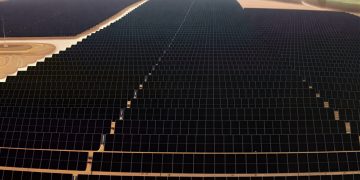







- Mining companies are expanding solar projects to protect operations from ongoing electricity shortages.
- Zimplats, Blanket Mine and lithium producers are investing in on-site power to reduce reliance on the national grid.
- The shift comes as Zimbabwe works to upgrade ageing power stations and expand renewable energy capacity.
MAJOR mining companies in Zimbabwe are expanding their on-site solar power initiatives to safeguard their operations against ongoing electricity shortages, as the nation grapples with supply issues.
Currently, the country only produces about half of the 2,000 megawatts it needs, with outdated coal plants and reduced hydropower output putting pressure on the grid.
Platinum miner Zimplats has announced that its 45-megawatt Phase 2A solar project is “progressing as planned” and is set to be finished in the first half of its 2027 financial year. The company noted that this project will boost its total solar capacity to 80 MW, with a cumulative investment of $24 million against a $54 million budget.
Zimplats operates in Ngezi and Selous, where a reliable power supply is crucial for mining, smelting, and refining processes.
In the gold sector, energy firm CrossBoundary Energy has successfully acquired a 13.9-megawatt solar photovoltaic plant at Caledonia Mining’s Blanket Mine in Gwanda. The company said that the facility “currently meets approximately 21% of Blanket Mine’s energy needs,” providing “cost savings and enhanced energy security.”
“The mining sector is essential to economic growth and prosperity in Zimbabwe and beyond; yet, power supply can be a significant barrier to sector growth,” said Tessa Lee, CrossBoundary Energy’s chief regulatory officer. She further emphasised that distributed energy resources “can play an outsized role.”
At the handover ceremony, Energy Minister July Moyo expressed his enthusiasm for private investment in renewable energy. “It is heartening to note that Caledonia has responded to our call for private sector participation in renewable energy development,” Moyo said.
Meanwhile, Zimbabwe’s power utility ZESA is working on upgrades to its conventional generation facilities. Acting CEO Cletus Nyachowe announced a $455 million concession deal with Jindal Africa to refurbish units at Hwange power station, which is expected to “add 400 MW to our output within the next 48 months,” with rehabilitation “set to commence in the first quarter of 2026.”
Mining executives have pointed out that on-site generation helps mitigate the risks associated with diesel costs and grid outages, especially during peak demand times.
“Nearly 200 MW of on-site energy projects have already been licensed in Zimbabwe,” Lee noted, highlighting the regulatory approvals for distributed renewable projects.
In the lithium sector, Prospect Lithium Zimbabwe has kicked off construction on a 70-megawatt solar plant to support its growing processing operations. The company views this project as a crucial step towards stabilising power supply in light of increasing industrial demand.
Zimbabwe’s move towards solar energy shows a wider trend across Africa, where mining companies are increasingly adopting renewable generation to cope with cost fluctuations and investor concerns regarding carbon emissions.
The government has laid out plans to boost renewable energy capacity as part of its long-term energy strategy, while also encouraging large industrial users to generate their own power to relieve pressure on the grid.
Energy analysts suggest that the speed of renewable investment will depend on currency stability, access to financing, and grid integration rules, which continue to pose challenges for smaller operators.


