- Zimbabwe’s mines minister says mining companies are making good progress on mineral beneficiation.
- Dinson Iron and Steel Company and Steel Makers showcased locally processed steel products at Mine Entra.
- The government says it will continue enforcing local value addition to create jobs and grow the economy.
THE ZIMBABWEAN government is satisfied with the progress mining companies are making on mineral beneficiation, Mines and Mining Development Minister Dr Polite Kambamura said on Wednesday.
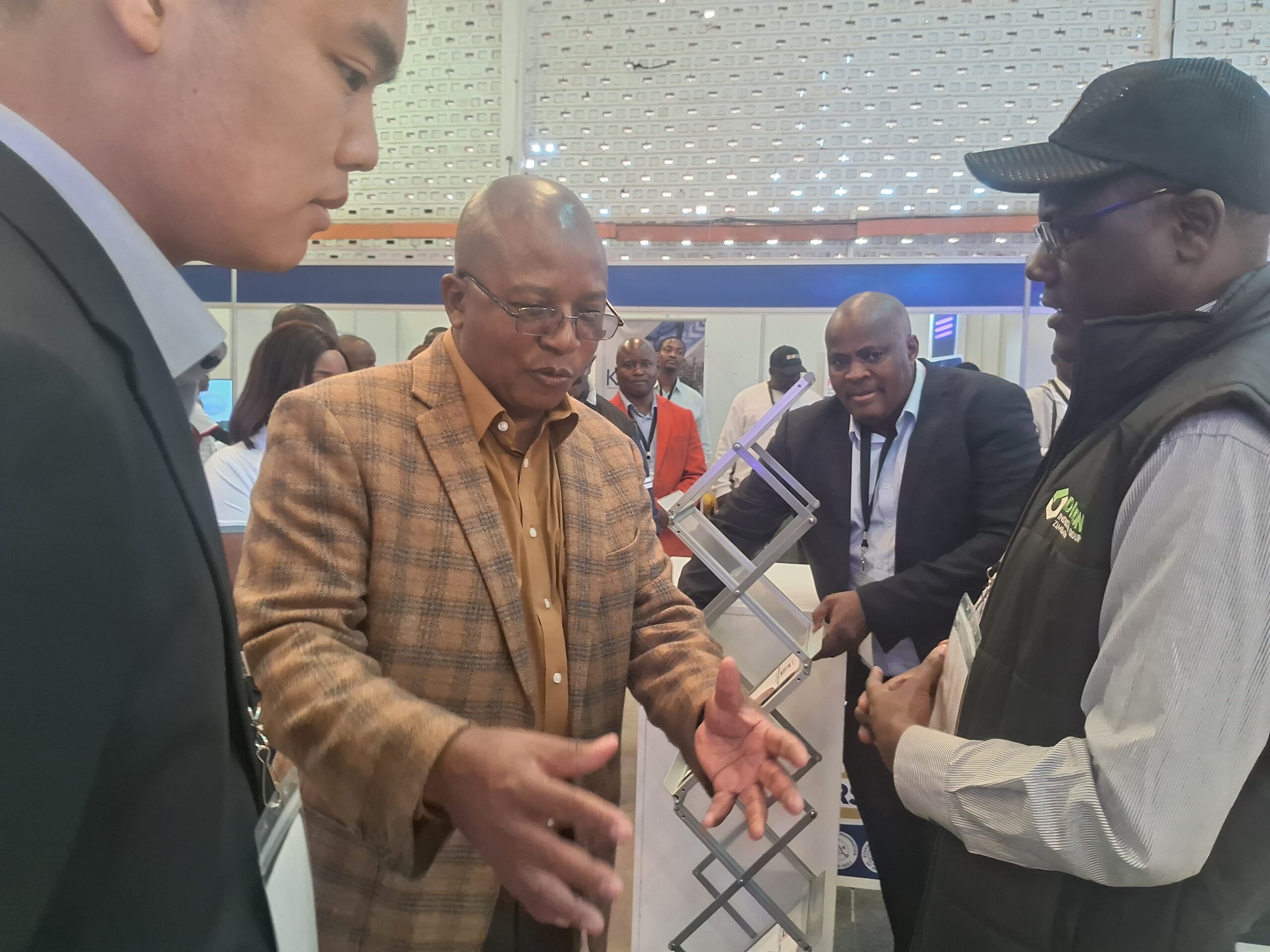
Speaking after touring exhibition stands at Mine Entra in Bulawayo, Kambamura said companies were increasingly processing minerals locally instead of exporting raw materials.
“We are satisfied with the level of compliance that we are seeing from our mining companies on beneficiation,” Kambamura said.
“The commitment that has been exhibited here today by the iron and steel giants, Dinson and Steel Makers, who are exhibiting beneficiated steel, shows that they understand the direction that government is taking.”
The minister’s comments come months after Zimbabwe tightened its push for local value addition.
In February, the government suspended exports of raw minerals and lithium concentrates, saying the move was aimed at promoting local beneficiation, increasing value retention and improving accountability in the mining sector.
Under the new rules, only mining companies with approved beneficiation facilities and valid mining titles are allowed to export certain minerals, while regulators have been directed to enforce stricter compliance.
Kambamura said beneficiation remains at the centre of Zimbabwe’s mining policy.
“Value addition is no longer negotiable. We want to see our minerals being processed here, creating employment and contributing to the growth of the economy,” he said.
The minister said the government would continue enforcing rules that require companies to process minerals in Zimbabwe before export.
His remarks were made as Dinson Iron and Steel Company and Steel Makers displayed locally produced steel products made from processed raw materials at Mine Entra.
Dinson is developing one of Zimbabwe’s largest integrated iron and steel projects at Manhize in Mashonaland East, while Steel Makers has operated steel manufacturing plants in the country for many years.
The government says projects such as these are important because they keep more of the mining value chain inside Zimbabwe.
Instead of exporting raw minerals, beneficiation allows companies to produce higher-value products, create more jobs and supply local industries before selling to export markets.
Zimbabwe has made beneficiation a key part of its industrial policy.
The Zimbabwe National Industrial Development Policy 2026-2030 identifies mineral beneficiation as one of the main ways to drive industrialisation, support downstream manufacturing and increase local economic value from mining.
The policy is also reflected in recent government measures affecting critical minerals.
In May, Zimbabwe formally classified 14 minerals as critical and strengthened restrictions on exports of unbeneficiated minerals as part of efforts to encourage more local processing.
While large companies have invested in processing plants, smaller miners have previously raised concerns about the cost of beneficiation infrastructure and access to reliable electricity and finance.
Kambamura said the government would continue monitoring compliance across the sector while supporting companies investing in local processing.
“We will continue to monitor progress and provide support where necessary to ensure beneficiation targets are met across all mineral sectors,” he said.