
When engineers gather at the majestic Elephant Hills Resort in Victoria Falls this coming November, they will not just be talking about concrete, steel and tar.
They will be talking about algorithms, digital twins, drones, and how artificial intelligence can tell when a dam wall is about to fail, when a truck is burning too much fuel, or when a road will need maintenance before a single pothole appears.
The Zimbabwe Institution of Engineers (ZIE) 2026 Annual Conference, set for 24-27 November, is themed “Engineering the Future: Smart and Sustainable Infrastructure Through AI, Innovation and Strategic Investment.” It is a deliberate signal that Zimbabwe’s engineering profession is pivoting.
For decades, the country’s infrastructure story has been one of deficits. Ageing rail lines, stressed energy systems, water shortages, and roads that struggle under rapid urbanisation and climate change.
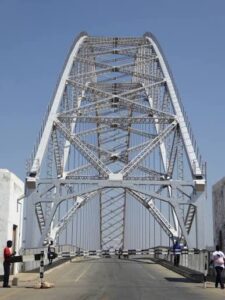
According to its concept note, modern infrastructure can no longer be seen as isolated assets. A road is not just a road – it is a system that enables agriculture, mining, tourism and trade. And in a world of AI, that system can be made smart.
“Zimbabwe is entering a period in which artificial intelligence, data systems, automation, robotics, digital twins, remote sensing and predictive analytics can materially improve the planning, construction, operation and maintenance of infrastructure,” the ZIE Conference concept note states.
The most telling innovation at the conference will not be on the podium, but on the exhibition floor. ZIE is hosting a Digital Engineering and AI Exhibition that will demand more than brochures.
Exhibitors must show working solutions – code that runs, scans that render, systems that predict.
This is where companies like Vision AL Technology become central to the story. The Harare-based firm does not build mines – it makes mines intelligent. Its modules turn the dust and diesel of a mine site into data.
Its LiDAR Scanning creates precise 3D renders of a pit; its Fuel Management Solution sniffs out theft and waste that can bleed a mine dry; its Geotechnical Intelligence watches a slope for the slightest tremor of instability; its Fleet Monitoring ensures an excavator does not sit idle while costing thousands.
“Every operation is unique,” the company says – a philosophy that aligns perfectly with ZIE’s push for locally relevant, scalable solutions.

The conference’s brilliance lies in its alignment. It directly feeds into NDS2 (2026-2030), Zimbabwe’s blueprint for becoming an upper-middle-income society. It speaks to the National AI Strategy, the Broadband Plan, and the continental Agenda 2063.
It also brings everyone into one room: the engineer with a prototype, the student with an idea, the bank with capital, the ministry with a project, and the local authority with a service delivery headache.
On the final day, there will be no vague communique. ZIE promises a Conference Action Framework – with owners, timelines and commitments that can be tracked.
As one senior engineer put it, “We have diagnosed enough. Now we need to build – and build smart.”
From 24 November, in the city of smoke that thunders, Zimbabwe’s engineers will try to show how.