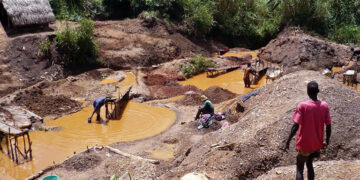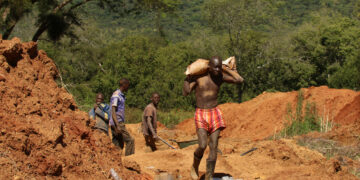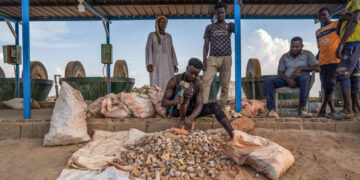

The planetGOLD Zimbabwe Annual Stakeholders Conference will be held on 28 and 29 October 2026 at Cresta Lodge in Msasa, Harare, under the theme “Unlocking Responsible Gold in Zimbabwe: Formalization, Financing, and Technology for a Mercury-Free ASGM Sector”.
Addressing a media briefing ahead of the conference, Artisanal and Small-Scale Gold Mining Technical Specialist for planetGOLD Zimbabwe, Eng Mollin Siwella, said the gathering comes at an important time for Zimbabwe’s artisanal and small-scale gold mining sector, which plays a significant role in livelihoods and economic activity but whose long-term sustainability depends on strengthening formalisation, improving access to appropriate financing, promoting safer mining practices and transitioning to mercury-free processing.
Eng Siwella said the conference will bring together government institutions, miners, development partners, technical experts, financial institutions, civil society and other stakeholders to share experiences, examine practical solutions and identify opportunities for collective action.
“Our central message is that responsible gold mining requires more than extracting gold. It requires systems that enable miners to operate legally, safely, profitably, and in ways that protect people and the environment,” Eng Siwella said.
She said planetGOLD Zimbabwe is a five-year project supported by the Global Environment Facility, led by the United Nations Environment Programme and executed by IMPACT in partnership with the Ministry of Mines and Mining Development and the Ministry of Environment, Climate and Wildlife.
The project seeks to reduce mercury use in artisanal and small-scale gold mining while improving the health and livelihoods of mining communities.
In Zimbabwe, it plans to support 7,500 men and women across 11 mine sites, reduce mercury use by 4.85 tonnes over five years and support improved management of approximately 76,000 hectares of landscapes.
Eng Siwella said the conference will focus on three interconnected pillars. On formalisation, she said it must create a practical pathway for artisanal and small-scale miners to operate responsibly and access support and services, and should not be viewed solely as a regulatory requirement but as a foundation for safer operations and responsible participation in the gold value chain.
On financing, she said miners need financing arrangements that enable them to invest in safer equipment, improve productivity and adopt mercury-free processing technologies.
On technology, she said moving away from mercury requires technologies that are “technically suitable for the ore being processed, economically viable for miners, and practical to operate and maintain.”
She stressed that the three issues cannot be addressed in isolation, noting that “formalisation without technical competence may not resolve safety and environmental challenges. Technology without financing may remain inaccessible. And financing without responsible operating practices may not deliver lasting benefits.”
Eng Siwella said highlights of the conference include the launch on 28 October of the publication A Guide to Reforming Formalisation of the Artisanal and Small-Scale Gold Mining Sector in Zimbabwe, a dedicated session on mercury-free gold processing technologies, discussions on financing responsible mining enterprises with contributions from mining representatives, the Mining Industry Loan Fund and Fidelity Gold Refineries, as well as sessions on practical skills development and responsible mining through the Zimbabwe School of Mines.
On 29 October, she said discussions will examine jurisdictional and landscape approaches to sustainable artisanal and small-scale gold mining in protected areas, using the Umfurudzi National Park case, and how government, communities and other stakeholders can work together to advance responsible mining.
Eng Siwella said the conference is expected to improve the sharing of evidence and lessons, strengthen dialogue on the policy, financial and technological conditions required for responsible mining, and identify practical opportunities for collaboration with particular attention to the participation of women miners and young people.
She said the value of the conference will be measured not only by the discussions held but by the extent to which those discussions contribute to better decisions, stronger partnerships and practical changes in mining operations.
“As we look ahead to the conference, we recognise that transforming artisanal and small-scale gold mining is a shared responsibility,” Eng Siwella said, adding that Zimbabwe has an opportunity to advance a mining sector in which “formalisation is practical, financing supports responsible enterprise, technologies are suited to miners’ needs, and environmental and health protection are integral to gold production.”