Zimbabwe is sitting on one of the world’s most strategic lithium endowments, but it is still capturing only a fraction of the value from its mines, while communities, workers and small-scale miners bear the heaviest costs of the boom.
That is the central message of a new situational report by the Zimbabwe Environmental Law Organisation (ZELO), titled Mine to Market for Critical Minerals: Zimbabwe’s Lithium Supply and Value Chain Situational Report, published in November 2025.
The report traces lithium from extraction to processing, transportation, trade routes and export markets, drawing on more than 12 months of field research between 2024 and 2025. The ZELO team visited lithium-rich districts including Goromonzi, Mutoko, Mberengwa, Zvishavane, Bikita, Buhera, Insiza, Kamativi, Marondera, Shamva, Shangani and Gwanda, as well as the Beitbridge, Chirundu, Nyamapanda and Forbes border posts.
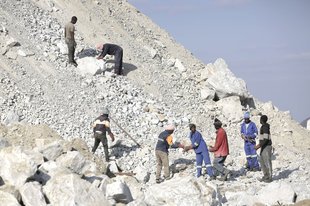
The researchers engaged miners, mine workers, transporters, border officials, mineral marketing experts, local authorities, community monitors, non-governmental organisations and other actors along the value chain, with particular attention to artisanal and small-scale miners in Mutoko, Mberengwa, Insiza, Zvishavane and Bikita.
“Lithium is among the critical energy minerals underpinning the global energy transition, serving as a key component in renewable energy technologies aimed at achieving net-zero ambitions worldwide,” the report says, noting that despite the current decline in global lithium prices, demand is expected to continue rising due to its use in batteries for electric vehicles, energy storage systems, wind turbines, solar panels and the defence industry.
By early 2023, Zimbabwe had more than nine operational lithium mining companies, more than 17 licenced Approved Processing Plants, 42 foreign lithium mining investment applications, and numerous artisanal and small-scale operations, some active and others abandoned. The report says growth has been primarily driven by foreign investment from China, Australia and the United Kingdom.
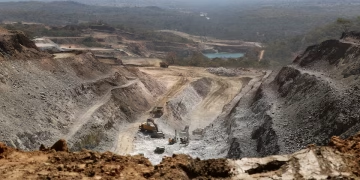
Large-scale operations are concentrated in Bikita, Kamativi, Mberengwa, Buhera, Mutoko, Zvishavane, Gwanda, Insiza and Goromonzi, areas rich in lithium-bearing minerals such as spodumene, lepidolite and petalite. Several operations are being established at former old mines, including Kamativi, formerly a tin-tantalum mine from 1936 to 1994, Bikita Minerals, one of the world’s oldest lithium mines, Gwanda Lithium, formerly the Mbeta Gold Mine, Sandawana Mine, previously an emerald mine since the 1950s, and Benson Mine, formerly a gold mine in Mudzi.
But the report found that the global price slump hit large producers hard. Site visits to Zulu Lithium, Sabi Star, Bikita and Arcadia in August 2024 and February 2025 revealed that most companies had significantly scaled down mining operations. Some transport services were suspended, and workers were placed on unpaid leave or retrenched.
Large-scale operators also cited a difficult investment climate characterised by the retrospective increase of the Special Capital Gains Tax from 5 percent to 20 percent, the high cost of doing business and excessive local authority levies, limited access to water and persistent power shortages, policy uncertainty especially around taxation and export regulations, and numerous licences and fees imposed by various authorities.
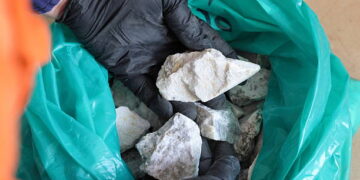
The report says the biggest loss to Zimbabwe is not in mining, but in what happens after mining. Data obtained from the Minerals Marketing Corporation of Zimbabwe underscores the imbalance, with a tonne of lithium concentrate with 4 percent to 5.5 percent lithium oxide content fetching approximately 300 to 600 US dollars, while refined lithium products such as battery-grade lithium hydroxide or lithium carbonate command prices exceeding 26,000 US dollars per tonne.
“This vast value differential highlights the urgent need for value addition and beneficiation,” the report says. “Instead of exporting low-value lithium concentrate, Zimbabwe should prioritize local production of refined lithium hydroxide and carbonate, which are essential components in battery manufacturing and the clean energy transition.”
On investment, the report says Chinese investors have consolidated their influence through the establishment of a Chinese Lithium Producers Association, which represents their collective interests in Zimbabwe. During a joint ZELO-Chamber of Mines engagement in Victoria Falls in 2024, the association raised concerns about the retrospective capital gains tax increase, the high cost of doing business, frequent power outages, limited access to water for processing, and persistent policy uncertainty regarding taxation, licensing and export regulations.
“While Chinese investment has been instrumental in reviving Zimbabwe’s lithium mining landscape, field findings and stakeholder interviews revealed widespread concerns about poor labour and environmental practices, especially among medium- and small-scale Chinese mining companies operating in the lithium, gold, coal, and chrome sectors,” the report says.
Common issues reported included non-compliance with environmental laws, including violations of Environmental Impact Assessment requirements and dust emission standards, water pollution from mine effluent discharged into rivers and dams, inadequate provision of personal protective equipment and low wages for mine workers, and worker abuse, discrimination and poor occupational health standards.
“These malpractices have contributed to the perception that Chinese companies possess a poor human rights and environmental record in Zimbabwe, an issue that taints the country’s lithium supply chain and raises reputational risks for Zimbabwean exports in global markets increasingly sensitive to Environmental, Social, and Governance standards,” the report says.
The report warns that although Zimbabwe hosts Australian and British mining interests, the dominance of Chinese companies has created market concentration that limits competition and reduces Zimbabwe’s bargaining power.
“This imbalance restricts the country’s ability to derive optimal economic and social value from its lithium resources and exposes it to external shocks arising from shifts in Chinese global investment or commodity demand,” the report says.
On the way forward, ZELO calls for public-private partnerships, joint ventures and collaborations between local and international actors to support Approved Processing Plants, energy hubs and skills transfer, while also attracting responsible investors from Europe, the United States, Korea, Japan and other regions. It says overreliance on Chinese companies and support may pose risks in the event of an economic downturn in China or challenges related to low-quality equipment, pricing and services.
The report also urges government to diversify export markets and investors, reduce reliance on a single export market, particularly China, by exploring new global trade partners, expanding market outreach, and aligning domestic production with international demand trends.
“Market diversification will enhance resilience, improve competitiveness, and strengthen Zimbabwe’s bargaining power,” the report says.
It further recommends that government develop and implement a comprehensive Responsible Mining Policy or Environmental, Social, and Governance framework tailored to Zimbabwe’s mining sector, encourage lithium companies to join international standards such as the Initiative for Responsible Mining Assurance, and actively participate in OECD forums on responsible mineral supply chains, join the Extractive Industries Transparency Initiative, and meaningfully implement United Nations Business and Human Rights frameworks.
“By addressing identified challenges, Zimbabwe can transform its lithium industry into a sustainable and profitable contributor to national development and regional competitiveness,” the report says. “Building investor and community confidence is critical to achieving a resilient and inclusive lithium value chain.”