- Mollin Siwela joined a UN leadership programme that ended in February this year.
- She said artisanal miners must be recognised as legitimate economic actors.
- Siwela called for rights-based formalisation and values-driven leadership in the gold sector.
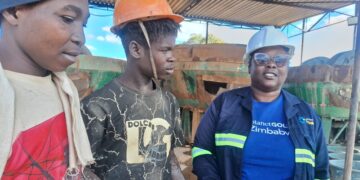
MOLLIN Siwela, a metallurgical engineer and manager at planetGOLD Zimbabwe, joined the United Nations University’s Global Leadership Training Programme on Sustainable Development in Africa.
The programme concluded in February this year. Participants included postgraduate students, policymakers, academics, and practitioners from across Africa to discuss leadership, democracy, civic engagement, and public policy.
Siwella said the discussions resonated with her work in Zimbabwe’s artisanal and small-scale gold mining (ASGM) sector.
“The ASGM sector contributes significantly to the national economy yet remains largely informal and structurally marginalised,” she said.
She explained that informality stems from exclusion from capital, land, and financial access.
“The persistent informality is not simply a regulatory failure, but a structural response to exclusion,” she said.
Siwela said formalisation must be treated as a rights-based process.
“Formalisation should recognise these miners as legitimate economic actors entitled to protection, representation, capacity building, access to finance and appropriate technology, as well as meaningful participation in policy processes,” she said.
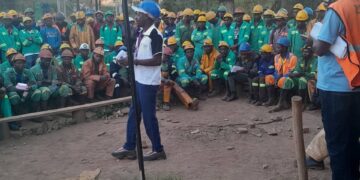
Zimbabwe’s ASGM sector employs more than 300,000 people and is a major source of gold output, but faces challenges of informality, environmental degradation, and mercury use.
PlanetGOLD Zimbabwe, where Siwela works, aims to reduce mercury use, improve safety, and connect miners to formal markets.
She said the programme also stressed the importance of regenerative education, interdisciplinary collaboration, and community-led development.
“The future of ASGM depends on values-driven leadership capable of stewarding long-term, equitable change,” she said.