- JOGMEC to invest up to $34 million in Toyota Tsusho’s Namibia rare earth venture.
- Project targets the Lofdal deposit, rich in dysprosium and terbium.
- Would be Japan’s first rare earth mine development in Africa.
- Final commercialisation decision targeted for fiscal year ending March 2027
JAPAN has made a fresh move into African critical minerals, as state-owned Japan Organization for Metals and Energy Security (JOGMEC) and trading house Toyota Tsusho are investing up to 47.7 million Canadian dollars ($33.9 million) in a heavy rare earths project in Namibia, Reuters reported.
The partners call it Japan’s first rare earth mine development in Africa.
The project centres on the Lofdal deposit in Namibia’s Kunene region. It’s being developed through a new special purpose company, TJ Namibia Rare Earths, Reuters reported.
The move comes as Japan looks to diversify its critical mineral supplies. China has tightened export controls on heavy rare earths and related magnets. Reuters noted Beijing first imposed those controls in April 2025, and has tightened restrictions toward Japan specifically three times since.
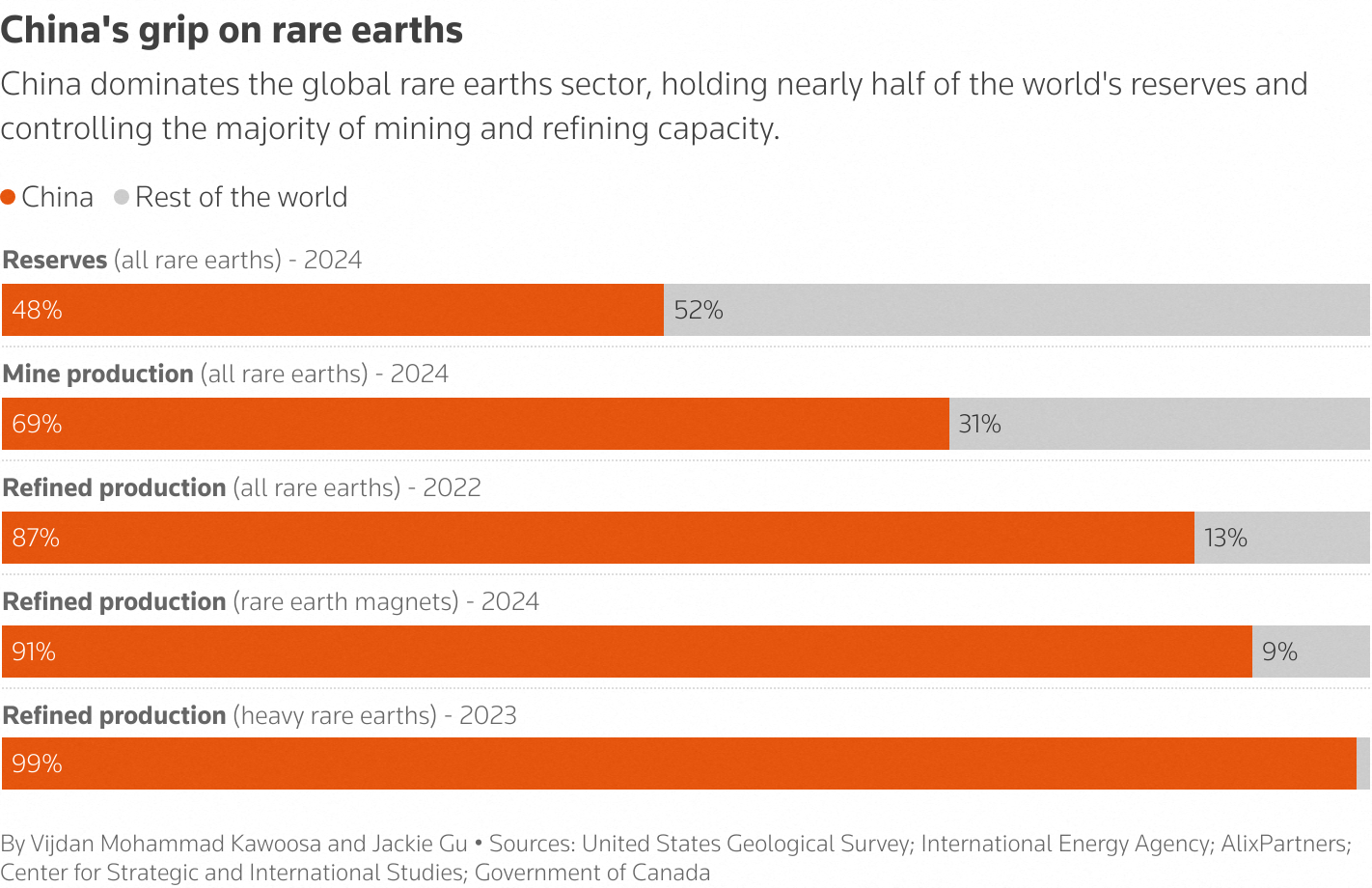
It’s a notable entry into a continent where Chinese capital has dominated critical minerals investment for years, including in Zimbabwe’s own lithium sector. Japan’s move into Namibia is a sign that non-Chinese buyers are starting to compete for African supply, at least in rare earths.
What’s being developed
The Lofdal deposit holds substantial heavy rare earth resources, including dysprosium and terbium, Reuters reported. These elements go into the permanent magnets that power EV and automotive motors.
Namibia Critical Metals’ own project filings show a measured and indicated resource of 58.5 million tonnes, grading 0.16% total rare earth oxide. Expected annual production is around 2,000 tonnes of rare earth oxide. That includes 119 tonnes of dysprosium and 18 tonnes of terbium, over a projected 13-year mine life. Toyota Tsusho’s own release put the estimated capital cost at around $348 million. A definitive feasibility study still has to be done.
The project has been years in the making. Reuters noted it began in 2020, as a joint exploration venture between JOGMEC and Canada’s Namibia Critical Metals. Toyota Tsusho joined in March this year, through a competitive bidding process, acquiring part of JOGMEC’s option interest.
Namibia Critical Metals holds a 95% interest in the project. The remaining 5% is reserved for historically disadvantaged Namibians, under the terms of the mining licence, according to the company’s own disclosures.
JOGMEC and Toyota Tsusho will now run a feasibility study through the new joint entity, Reuters reported. They’re aiming for a final commercialisation decision by the fiscal year ending March 2027. Despite the headline investment figure, this is still a bet on a future mine, not a producing one.
Where Zimbabwe fits, or doesn’t, yet
Zimbabwe has not yet emerged as a heavy rare earths destination for this kind of non-Chinese capital, unlike its position in lithium and PGMs. Whether that’s a gap in exploration data, investor awareness, or a genuine geological limitation is worth its own scrutiny.
Japan and the U.S. are both now signalling willingness to fund African rare earth projects outside China’s orbit. That raises a question: what would it take to put Zimbabwe on that same list?
(c) Copyright Thomson Reuters 2026. Click For Restrictions