- Burkina Faso has increased gold production while expanding state control over major mines.
- The government moved key assets into its state mining company, SOPAMIB, under a revised mining law.
- Officials say the changes will boost national revenue, but security risks and investor concerns remain.
GOLD production in Burkina Faso has seen a significant increase, even as the military government tightens its grip on the sector, making mining a key part of its economic strategy.
The West African nation, which came to power under Captain Ibrahim Traoré following a coup in 2022, is now Africa’s fourth-largest gold producer. According to official data and the World Bank, gold makes up over 70% of the country’s export earnings.
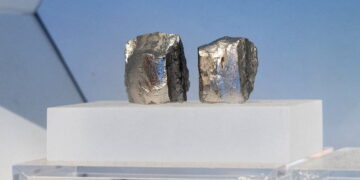
Mines Minister Yacouba Zabré Gouba announced that national gold output hit 94 tonnes in 2025, a rise from 57 tonnes in 2023, with artisanal mining contributing around 42 tonnes.
“The mining sector performed very well in 2025,” Gouba told state media. “Both industrial and artisanal production recorded strong results.”
This increase in output coincides with a notable shift in policy.
In April, Prime Minister Jean Emmanuel Ouédraogo revealed that the state would be nationalising more foreign-owned industrial mines through the Société de Participation Minière du Burkina (SOPAMIB), a state mining company established under the updated 2024 mining code.
“SOPAMIB has already taken control of two former Endeavour Mining operations, Boungou and Wahgnion,” Ouédraogo said at the time. He added that the aim was to ensure that Burkinabè citizens benefit more directly from the country’s mineral wealth.
Endeavour Mining, which sold off the two assets, said in an October 2025 announcement that it remains “a trusted partner” to Burkina Faso and is “not currently aware of any plans to revoke” its remaining permits. The company confirmed it had received an initial payment of $30 million related to the transaction.
The revised mining code enhances state participation in projects and strengthens oversight. Officials assert that these changes are designed to increase fiscal revenues and tighten control over production flows.
Burkina Faso’s gold mines are primarily located in the eastern and northern regions, with notable sites like Boungou in the Est Region and Wahgnion in the southwest. Unfortunately, parts of the north and east have been affected by an Islamist insurgency, which has increased the risks associated with operations and transport.
Security analysts, including those from the International Crisis Group, have cautioned that this instability complicates logistics and drives up costs for mining companies working outside the capital.
In light of this, the government argues that stronger state control is essential.
“Our objective is to guarantee that the country’s resources serve national development,” said Ouédraogo.
The international response has been cautious but pragmatic.
This month, the International Monetary Fund (IMF) completed its fourth review under Burkina Faso’s Extended Credit Facility and approved an immediate disbursement of around $33 million.
“The Burkinabè economy demonstrated resilience and robust growth,” the IMF noted, while also acknowledging “persistent security and humanitarian strains.”
Economists say that gold revenues are crucial for macroeconomic stability.
With gold prices hovering near historic highs, increased state participation could enhance fiscal receipts.
Artisanal mining, which contributes significantly to output, is also being integrated more closely into the formal system. Officials state that reforms are aimed at directing small-scale production through licensed buyers to minimise leakages.